






What's Happening?
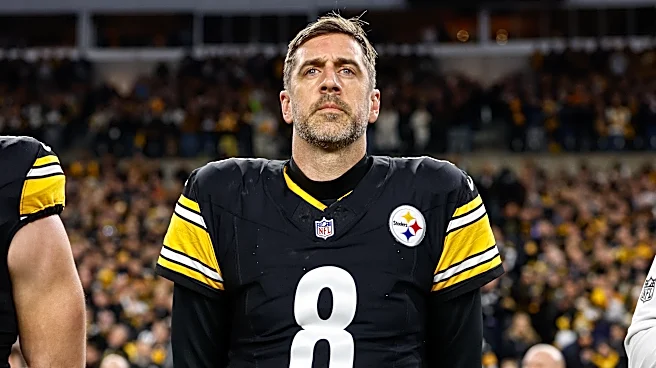
The Pittsburgh Steelers have announced that Aaron Rodgers will be their quarterback for the 2026 season, marking his final year in the NFL. This decision shifts the team's strategy from rebuilding to an all-or-nothing approach, aiming to give Rodgers a memorable
send-off with a potential Super Bowl victory. The team faces a competitive AFC North division, and the focus is on maximizing Rodgers' impact in his last season. The Steelers' quarterback room, which includes Mason Rudolph, Will Howard, and Drew Allar, will compete for the backup position and potentially take over after Rodgers' retirement.
Why It's Important?
Rodgers' return to the Steelers is significant as it represents a strategic pivot for the franchise, prioritizing immediate success over long-term development. This move could impact the team's dynamics, as younger quarterbacks will have to wait for their chance to lead. The decision underscores the high stakes involved in professional sports, where veteran players like Rodgers can influence a team's direction. For the Steelers, this season is an opportunity to capitalize on Rodgers' experience and leadership, potentially leading to a Super Bowl win, which would enhance the team's legacy and financial prospects.
What's Next?
As the 2026 season unfolds, the Steelers will focus on integrating Rodgers into their game plan and optimizing their roster to support his strengths. The competition among the backup quarterbacks will be closely watched, as the team prepares for a future without Rodgers. The outcome of this season could influence the Steelers' long-term strategy, including potential changes in coaching staff and player acquisitions. Fans and analysts will be keenly observing how the team manages this high-pressure situation and whether Rodgers can replicate past successes.