


What's Happening?
The global transition away from oil and gas is increasingly being driven by concerns over energy security rather than solely environmental considerations. Recent geopolitical conflicts, particularly in the Middle East, have exposed vulnerabilities in fossil
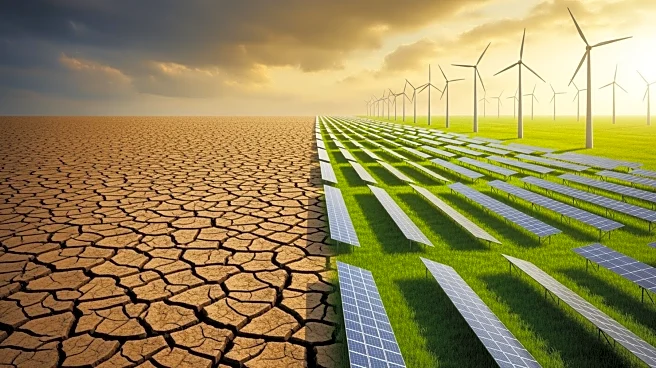
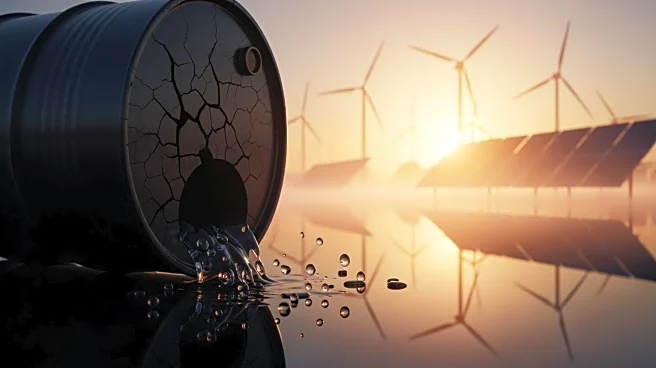
fuel supply chains, prompting strategists and industry experts to advocate for a more rapid shift to renewable energy sources. The closure of the Strait of Hormuz due to threats from the Iranian regime has significantly disrupted global oil shipments, leading to a sharp increase in oil prices. This situation underscores the susceptibility of oil and gas to geopolitical disruptions, contrasting with the stability offered by renewable energy technologies.
Why It's Important?
The shift towards renewable energy is crucial for enhancing national security by reducing dependency on volatile fossil fuel markets. The recent disruptions in oil supply chains highlight the risks associated with relying on imported hydrocarbons, which can be easily affected by geopolitical tensions. By investing in renewable energy, countries can achieve greater energy independence and stability, mitigating the economic impacts of oil price fluctuations. This transition also aligns with broader global efforts to combat climate change, offering a dual benefit of environmental sustainability and security.
What's Next?
As geopolitical tensions continue to affect fossil fuel markets, governments and industry leaders are likely to accelerate investments in renewable energy infrastructure. This includes expanding solar and wind energy projects and enhancing energy storage capabilities. The focus will be on creating resilient energy systems that are less susceptible to international conflicts and supply chain disruptions. Additionally, policy frameworks may be adjusted to support this transition, encouraging innovation and investment in clean energy technologies.
Beyond the Headlines
The move towards renewable energy not only addresses immediate security concerns but also has long-term implications for global energy markets. It could lead to a restructuring of international trade relationships, as countries become less reliant on oil imports. This shift may also influence geopolitical dynamics, with energy independence potentially altering power balances between nations. Furthermore, the transition supports economic diversification, creating new opportunities in the renewable energy sector and fostering technological advancements.