


What's Happening?
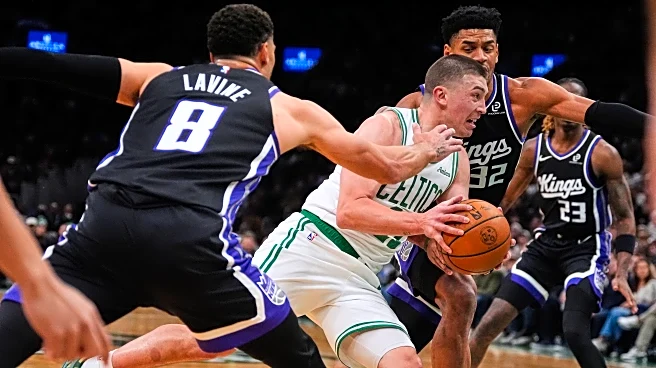
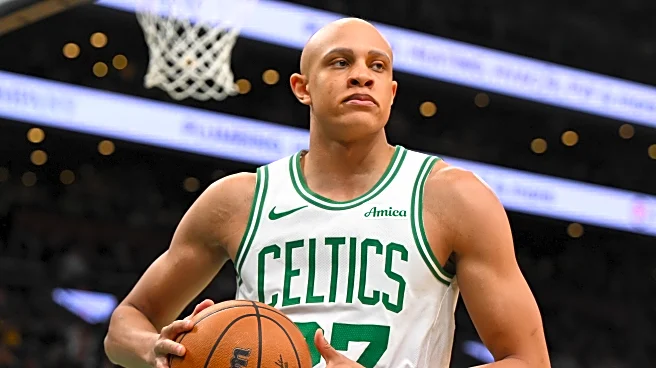
Jordan Walsh, a player for the Boston Celtics, delivered a subdued performance in a recent game against the Sacramento Kings. During the Celtics' 112-93 victory, Walsh scored five points, with a shooting record of 1-7 from the field, 1-5 from three-point range, and 2-4 from the free-throw line. He also contributed three rebounds, one block, and one steal over 16 minutes of play. This game marks the seventh time in the last eight games that Walsh has played fewer than 20 minutes. His limited playing time is attributed to Sam Hauser's emergence as the starting power forward, which has relegated Walsh to a backup role. Over the past two weeks, Walsh has averaged 3.4 points and 2.5 rebounds in 14.5 minutes per game, placing him outside the top 300
in nine-category fantasy basketball formats.
Why It's Important?
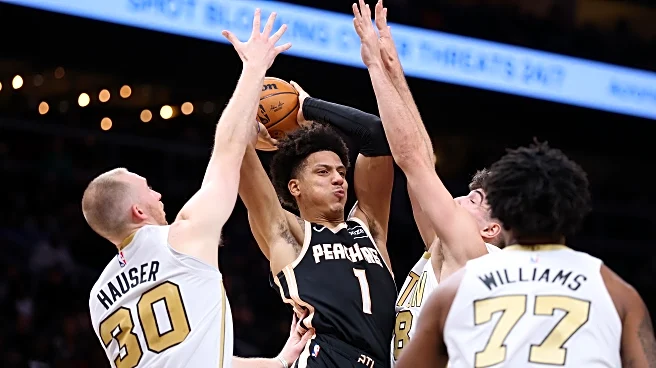
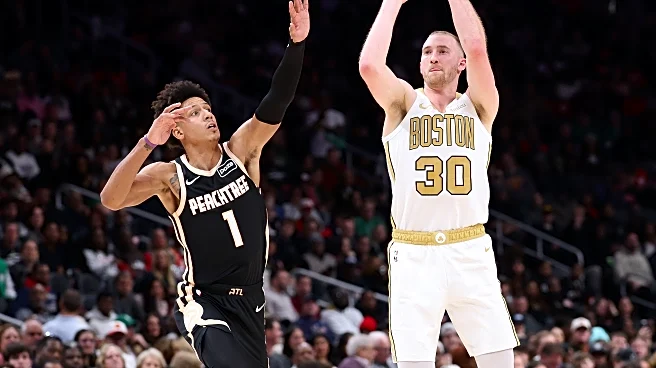
Walsh's reduced playing time and performance have implications for both the Celtics' strategy and his career trajectory. As Sam Hauser solidifies his position as the starting power forward, Walsh's opportunities to make a significant impact on the court are limited. This situation affects his visibility and potential development as a player, which could influence his future with the team. For the Celtics, the decision to prioritize Hauser over Walsh suggests a strategic focus on optimizing the starting lineup for better performance outcomes. This shift could impact team dynamics and the distribution of playing time among other players, potentially affecting overall team performance and morale.
What's Next?
The Celtics may continue to evaluate their lineup and make adjustments based on player performance and team needs. For Walsh, improving his performance during limited playing time could be crucial for regaining a more prominent role. The team's coaching staff might also consider different strategies to integrate Walsh more effectively, depending on game situations and opponent matchups. As the season progresses, monitoring Walsh's development and the team's performance will be essential to understanding the long-term implications of these lineup decisions.