







What's Happening?
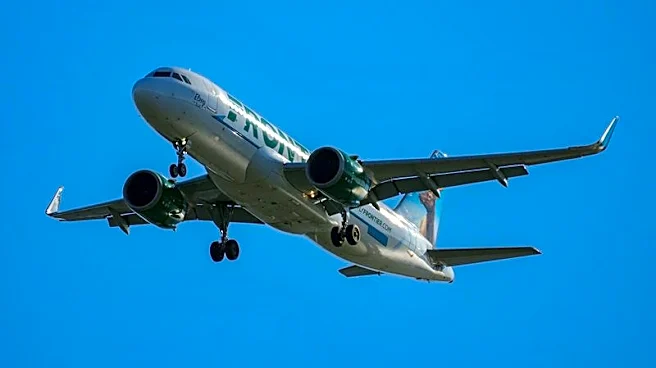
Spirit Airlines is on the brink of financial collapse as negotiations for a government-backed rescue have stalled. The airline, which has faced two bankruptcies since 2024 and is struggling with rising fuel costs due to the Iran war, is seeking a $500
million loan from the federal government. This deal would allow the government to take control of 90% of the company. However, the agreement is contingent on the approval of Spirit's creditors, some of whom, including Ares Management Corp. and Cyrus Capital, oppose the plan. Ken Griffin's Citadel proposed an alternative, which was rejected. A bankruptcy hearing was postponed as discussions continue. Spirit has $250 million in cash, but creditors have a lien on it, and the airline recently missed an interest payment, risking default on its debtor-in-possession agreement.
Why It's Important?
The potential collapse of Spirit Airlines could have significant implications for the U.S. aviation industry and its employees. A government takeover, as suggested by President Trump, could save thousands of jobs and utilize Spirit's assets for military operations under the Defense Production Act. This move could stabilize the airline temporarily, but it also raises questions about government intervention in private industry. The situation highlights the broader challenges facing the aviation sector, including financial instability and the impact of geopolitical events on fuel prices. The outcome of these negotiations could set a precedent for future government bailouts in the industry.
What's Next?
If the government bailout is approved, Spirit Airlines may be used for military operations, with plans to sell the company to another airline post-bankruptcy. The Trump administration is monitoring the situation closely, considering options to support the aviation industry. The outcome of these talks will likely influence future government policies on airline bailouts and could affect the competitive landscape of the industry. Stakeholders, including creditors and employees, are awaiting the resolution of these negotiations, which will determine the airline's future and its role in the U.S. aviation market.