




What's Happening?
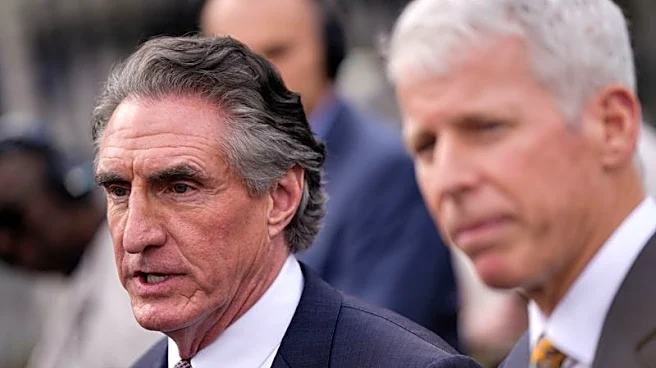
U.S. officials, including Interior Secretary Doug Burgum and Energy Secretary Chris Wright, are urging domestic oil producers to increase their output in response to a global supply shock caused by disruptions in the Strait of Hormuz. This key transit
route, crucial for global oil and liquefied natural gas supplies, has been effectively closed due to the conflict in Iran, removing an estimated 16 million barrels per day from the market. This has led to a sharp increase in crude and fuel prices. Despite U.S. production reaching record levels, the Trump administration sees an opportunity to further increase output to stabilize markets. However, industry response has been cautious, with producers hesitant to expand drilling due to uncertainty over the duration of the disruption and futures markets indicating lower prices ahead. Structural constraints such as permitting delays and regulatory restrictions are also limiting near-term production gains.
Why It's Important?
The call for increased oil production is significant as it highlights the U.S. government's strategy to mitigate the impact of global supply disruptions on domestic and international markets. By encouraging domestic producers to ramp up output, the administration aims to stabilize oil prices and ensure energy security. This move could potentially enhance the U.S.'s role in global energy markets, especially as geopolitical tensions in the Middle East continue to affect supply routes. The situation underscores the importance of regulatory reforms to facilitate quicker project development and operational flexibility, which could have long-term implications for the U.S. energy sector.
What's Next?
The Trump administration is expected to continue its efforts to encourage domestic oil production until global supply routes normalize. This includes maintaining current policies that avoid imposing restrictions on U.S. crude exports and not pursuing a windfall profits tax. The administration has also implemented temporary measures, such as waiving the Jones Act, to ease supply constraints. However, ongoing instability in the Middle East and uncertainty about the reopening of the Strait of Hormuz suggest that market volatility may persist, requiring continued vigilance and potential policy adjustments.