





What's Happening?
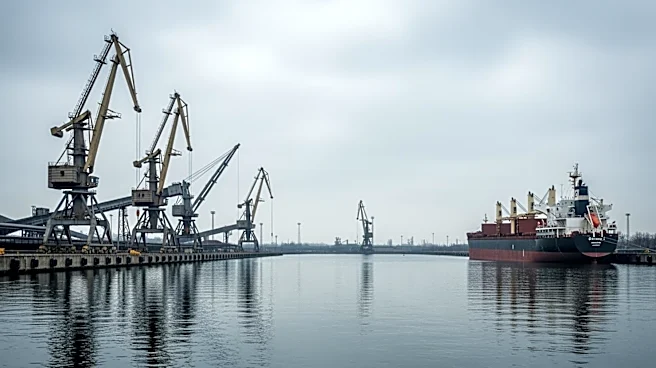
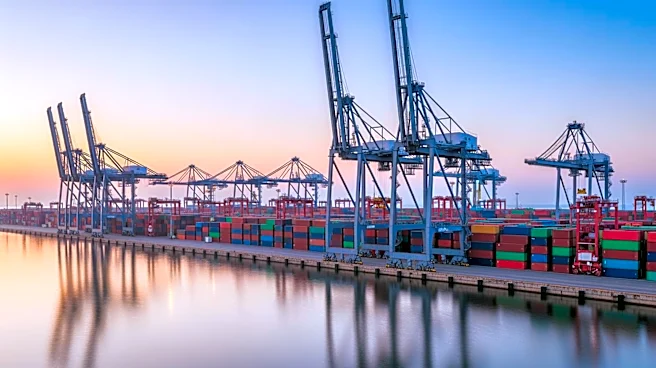
A report from Colliers indicates that U.S. seaport activity has stabilized at historically elevated levels, reflecting strong port-driven industrial demand despite ongoing trade and geopolitical uncertainty. The report notes that U.S. port activity transitioned
from pandemic-era volatility to a more normal trade environment in 2025. East and Gulf Coast ports are expected to maintain and gradually gain market share due to their proximity to major population centers and efficient distribution networks. Seaports are investing in infrastructure to enhance capacity and efficiency, which could offset short-term vacancy increases caused by new supply levels.
Why It's Important?
The stabilization of seaport activity is crucial for the logistics and supply chain sectors, as it supports consistent cargo flow and industrial demand. Infrastructure investments in ports can improve efficiency and capacity, benefiting shippers and reducing reliance on trucking. The shift towards East and Gulf Coast ports reflects strategic diversification in supply chains, which can mitigate risks associated with geopolitical tensions and trade policy shifts. These developments are likely to influence long-term investment strategies in port-adjacent industrial real estate.
What's Next?
Seaports will continue to focus on infrastructure improvements to handle larger vessels and enhance efficiency. The ongoing Iran conflict may impact seaport-focused leasing and investment activity through cost volatility and shifting trade flows. Stakeholders in the logistics and supply chain sectors will need to adapt to these changes, potentially reinforcing multi-port strategies that favor East and Gulf Coast ports. The industry may also explore further diversification in supply chains to mitigate geopolitical risks.