



What's Happening?
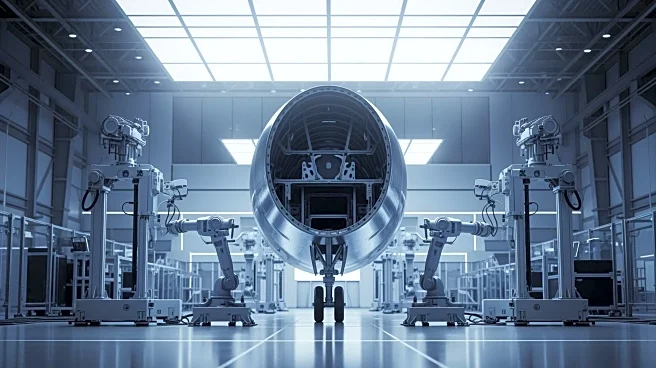
Boeing has completed a significant transaction to reabsorb key aerostructures operations from Spirit AeroSystems, marking a major realignment of its supply chain. This move comes after repeated quality issues and delays were reported across the manufacturing ecosystem, particularly affecting the 737 fuselage work. By bringing these operations back under its direct control, Boeing aims to improve quality consistency and streamline its production processes. This strategic decision is part of Boeing's broader efforts to stabilize and eventually increase its 737 production rates, with plans to reach 47 aircraft per month by mid-2026. The integration of Spirit AeroSystems is seen as a critical step in achieving these production goals.
Why It's Important?
The reabsorption
of Spirit AeroSystems operations is crucial for Boeing as it seeks to regain control over its supply chain and address past quality issues. This move is expected to enhance Boeing's ability to meet production targets, reduce unit costs, and improve delivery volumes, which are essential for generating cash flow and reducing debt. The decision also reflects Boeing's commitment to restoring trust with regulators, airline customers, and investors, as the company continues to recover from previous disruptions. Successful integration could lead to improved operational efficiency and a stronger competitive position in the aerospace industry.
What's Next?
Boeing will focus on integrating the reabsorbed operations from Spirit AeroSystems, ensuring that quality and production schedules are maintained. The company will also work towards achieving its production target of 47 737 aircraft per month by mid-2026. Stakeholders, including investors and regulators, will closely monitor Boeing's progress in stabilizing its production processes and meeting its delivery commitments. Additionally, Boeing's ability to manage this integration effectively will be critical in maintaining investor confidence and achieving its financial objectives.