


What's Happening?
As the new Major League Baseball (MLB) season begins, the focus is shifting from on-field performances to off-field labor negotiations. The current collective bargaining agreement (CBA) between the league and the MLB Players Association (MLBPA) is set
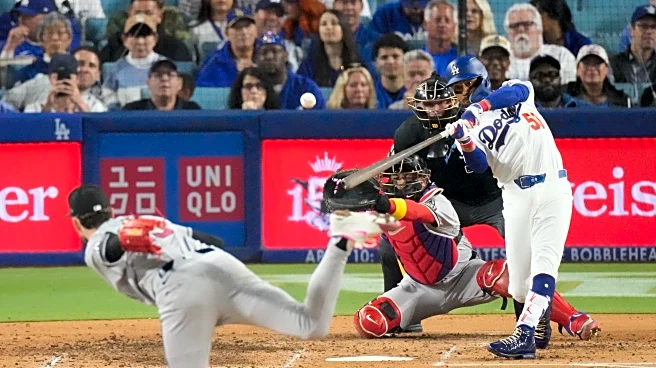
to expire on December 1, 2026. This expiration raises the possibility of a lockout, similar to the one in 2021 that lasted three months. The MLBPA, led by interim executive director Bruce Meyer, is preparing for negotiations that could be contentious, with issues such as salary caps and spending floors at the forefront. The league's commissioner, Rob Manfred, has previously indicated that an offseason lockout could be strategically beneficial for negotiations. The disparity in team spending, with high-spending teams like the Los Angeles Dodgers and New York Mets contrasting sharply with lower-spending teams, is a significant point of contention.
Why It's Important?
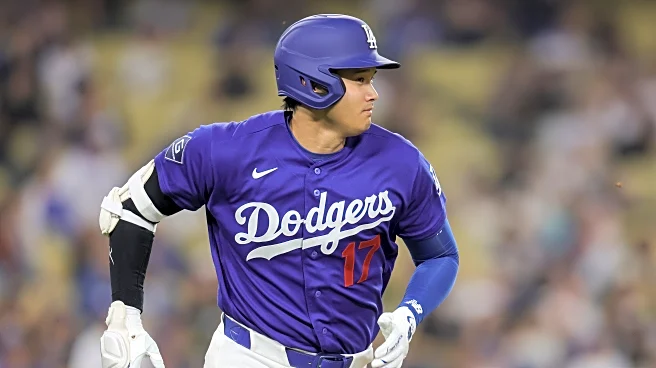
The potential lockout could have significant implications for the MLB, affecting not only the players and teams but also the broader sports industry. A work stoppage could disrupt the momentum baseball has gained in recent years, particularly with younger audiences. The MLB has seen increased viewership, partly due to rule changes and the international appeal of stars like Shohei Ohtani. A lockout could jeopardize this growth and impact the financial stability of teams, especially those reliant on regional sports networks that have recently collapsed. Additionally, the outcome of these negotiations could influence MLB players' participation in the 2028 Olympics, as ongoing labor disputes might prevent their involvement.
What's Next?
The key date for the MLB and MLBPA is December 1, 2026, when the current CBA expires. Leading up to this, both parties will engage in negotiations to address the core issues of salary caps and spending floors. The MLBPA is expected to push for mechanisms that ensure lower-spending teams invest more in player salaries, while the league may advocate for a salary cap to control spending. The outcome of these negotiations will determine whether a lockout occurs and how it might affect the 2027 season. Stakeholders, including team owners, players, and broadcasters, will be closely monitoring these developments, as the decisions made could have long-lasting effects on the sport.