





What's Happening?
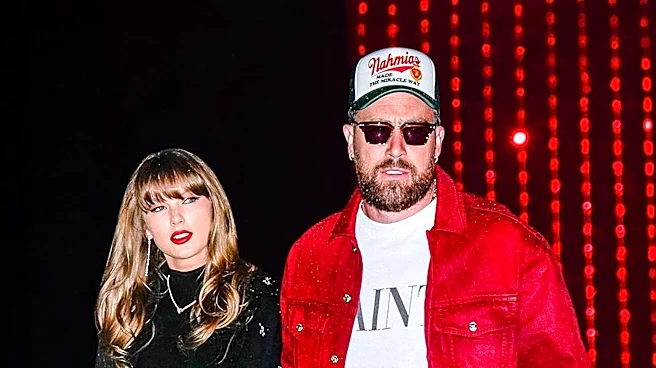
Taylor Swift is taking legal action against the use of AI-generated sound clones that replicate her voice with high accuracy. TAS Rights Management, representing Swift, has filed trademark applications for her spoken phrases 'Hey, it’s Taylor' and 'Hey, it’s Taylor Swift.'
This move aims to leverage trademark law to combat AI voice cloning, an area not originally covered by the Lanham Act, the 1946 federal trademark statute. The applications seek to establish these phrases as distinctive sound trademarks, which are protectable under trademark law if they are unique and recognized by consumers as identifying a single source. The challenge lies in proving the distinctiveness of these phrases, as trademarks can be inherently distinctive or acquire distinctiveness through extensive use and consumer recognition.
Why It's Important?
The rise of AI technology capable of creating realistic voice clones poses significant challenges for celebrities and brand owners. Without federal legislation specifically addressing AI voice cloning, individuals like Taylor Swift are turning to trademark law as a protective measure. The use of sound trademarks could provide a legal framework to combat unauthorized use of AI-generated voices, offering some protection while the legislative landscape evolves. This development is crucial for the entertainment industry, where voice and likeness are integral to personal branding and commercial value. The outcome of Swift's trademark applications could set a precedent for how sound trademarks are used to protect against AI deepfakes.
What's Next?
The U.S. Patent and Trademark Office will evaluate Swift's trademark applications to determine if her phrases are inherently distinctive or require evidence of secondary meaning. If successful, these trademarks could offer a new layer of protection against AI voice cloning. However, the effectiveness of sound trademarks in combating deepfakes remains limited, as they only protect against confusingly similar uses tied to related goods or services. The entertainment industry may need to adopt a multi-faceted legal strategy, combining sound trademarks with copyright protections and state right-of-publicity claims, to address the broader implications of AI technology.
Beyond the Headlines
The use of sound trademarks in this context highlights the evolving nature of intellectual property law in response to technological advancements. As AI continues to develop, legal frameworks must adapt to address new challenges, such as the unauthorized use of digital likenesses. This case underscores the need for comprehensive federal legislation to provide consistent protection across states, as current laws vary significantly. The entertainment industry, in particular, may need to advocate for stronger legal protections to safeguard against the misuse of AI-generated content.