






What's Happening?
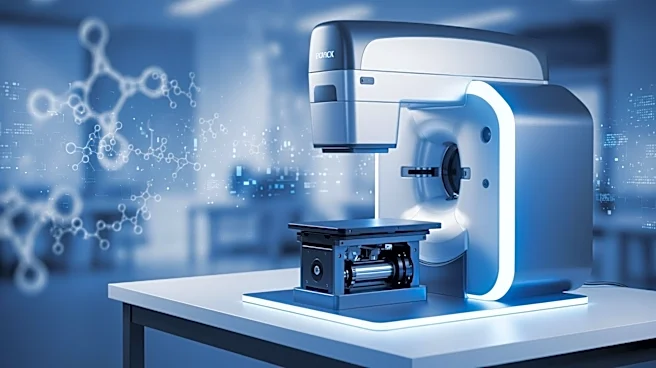
KUBTEC Scientific, a leader in X-ray imaging and irradiation technology, has introduced the XCELL TomoRad system at the American Association of Cancer Researchers (AACR) annual meeting. This new system represents a significant advancement in image-guided
radiotherapy (IGRT) by utilizing a 3D imaging technique known as 'tomosynthesis'. This method allows for the creation of three-dimensional images from multiple X-ray angles, offering advantages such as reduced radiation exposure, faster image acquisition, and lower costs compared to traditional microCT imaging. The TomoRad system aims to make IGRT more accessible to researchers by overcoming the high costs and complexity associated with previous systems, thus enabling more precise and customizable radiation treatments in pre-clinical studies.
Why It's Important?
The introduction of the XCELL TomoRad system is poised to democratize access to advanced IGRT capabilities for research labs, which have previously been hindered by the high costs and technical challenges of existing systems. By lowering the barriers to entry, KUBTEC Scientific is enabling more researchers to conduct targeted radiation studies, potentially accelerating the development of new cancer treatments. This innovation could lead to more efficient research processes, reduced animal stress during studies, and ultimately, faster translation of research findings into clinical applications. The system's affordability and ease of use may also encourage broader adoption, fostering advancements in cancer research and treatment methodologies.
What's Next?
As the XCELL TomoRad system becomes more widely available, research institutions are likely to integrate this technology into their studies, potentially leading to a surge in pre-clinical cancer research. The system's ability to deliver faster and more precise radiation treatments could result in new insights and breakthroughs in cancer therapy. Additionally, KUBTEC Scientific's commitment to innovation suggests that further enhancements and applications of the TomoRad system may be developed, expanding its utility beyond current capabilities. Researchers and institutions will be closely monitoring the system's impact on study outcomes and its potential to improve patient care in clinical settings.