
What's Happening?
The Apple TV series 'For All Mankind' has reached a pivotal moment in its fifth season with the episode titled 'Svoboda,' which marks the beginning of a Martian revolution. Set in an alternate reality
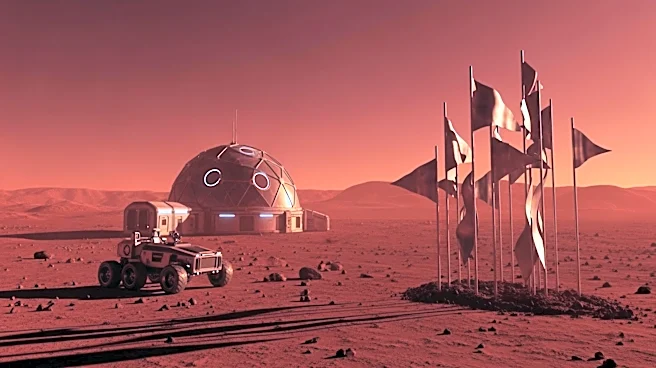
where the space race never ended, the show explores the colonization of Mars in the 2000s. The storyline has been building towards a significant conflict on Mars, with blue-collar workers demanding better conditions and rights. The latest episode reveals that tech companies Helios and Kuragin are planning to automate the Martian operations, threatening the livelihoods of settlers. This development has led to a rebellion in the Martian colony known as Happy Valley, where rebels are poised to take the governor hostage. The series draws on classic science fiction themes of revolution and independence, echoing narratives from other Mars-related stories in literature and media.
Why It's Important?
The storyline in 'For All Mankind' reflects broader themes of class struggle and the quest for independence, resonating with historical and contemporary issues. The depiction of a Martian revolution highlights the potential socio-political dynamics of space colonization, where distant colonies might seek autonomy from Earth-based control. This narrative can influence public perception of space exploration and the ethical considerations of colonizing other planets. It also underscores the challenges of managing resources and governance in extraterrestrial environments, which could become relevant as real-world space exploration advances. The show's portrayal of corporate interests clashing with worker rights on Mars mirrors current debates about automation and labor rights on Earth, offering a speculative lens on future societal challenges.
What's Next?
As 'For All Mankind' continues, viewers can expect further developments in the Martian revolution storyline. The show's creators have drawn parallels between the historical American Revolution and the fictional Martian uprising, suggesting that themes of independence and self-governance will be explored in depth. The series may delve into the consequences of the rebellion, including potential conflicts with Earth and the establishment of a self-sustaining Martian society. The narrative could also examine the role of technology and corporate power in shaping the future of space colonies. These themes are likely to resonate with audiences, sparking discussions about the future of space exploration and the ethical implications of human expansion into the cosmos.
Beyond the Headlines
The depiction of a Martian revolution in 'For All Mankind' raises questions about the cultural and ethical dimensions of space colonization. The series explores the identity of Martian settlers, who view themselves as distinct from Earthlings, highlighting the potential for new cultural identities to emerge in space. This narrative invites viewers to consider the long-term implications of human settlement on other planets, including the development of new social norms and political structures. The show also touches on the environmental impact of colonization, as the industrialization of Mars is portrayed as a catalyst for conflict. These themes encourage reflection on humanity's responsibility to preserve extraterrestrial environments while pursuing technological and societal advancement.