

What's Happening?
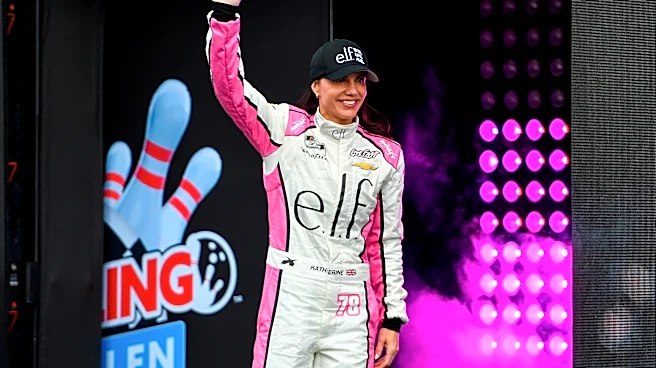
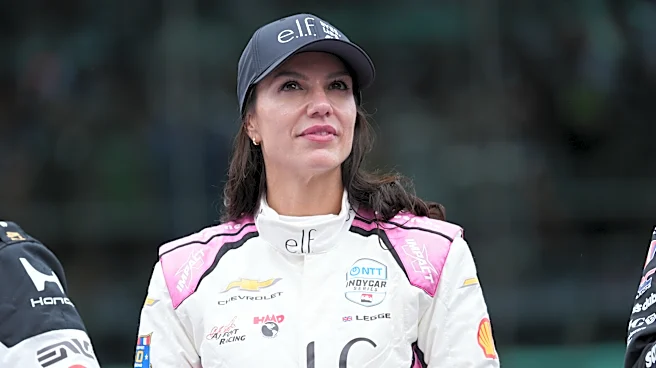
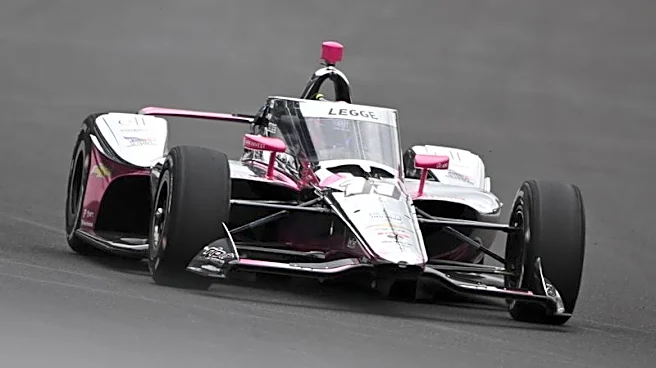
Katherine Legge, a driver for HMD Motorsports, experienced a significant setback during the Indianapolis 500, which was part of her attempt to complete the challenging 'double' of racing in both the Indy 500 and the NASCAR Coca-Cola 600 on the same day.
Legge's race at the Indianapolis Motor Speedway was cut short after just 18 laps when she swerved to avoid a collision with Ryan Hunter-Reay, who had lost control of his car. Despite her efforts, Legge's car crashed into the infield fence, resulting in significant damage. Fortunately, both Legge and Hunter-Reay were uninjured in the incident. Legge expressed her frustration at being taken out of the race due to circumstances beyond her control. Despite the crash, she plans to continue with her schedule and participate in the NASCAR race in Charlotte.
Why It's Important?
The incident highlights the inherent risks and challenges faced by drivers attempting the 'double,' a feat that involves competing in two major races on the same day, covering a total of 1,100 miles. This endeavor is not only physically demanding but also requires precise coordination and mental resilience. Legge's experience underscores the unpredictability of motorsport and the thin line between success and failure. The 'double' is a rare achievement, with only a few drivers having attempted it since its inception in 1994. Legge's attempt, despite its unfortunate end at the Indy 500, draws attention to the dedication and skill required to compete at such high levels in both IndyCar and NASCAR events.
What's Next?
Following the crash, Legge is set to travel to Charlotte to participate in the NASCAR Coca-Cola 600. This race will test her ability to quickly shift focus and adapt to a different racing environment. The outcome of her participation in the NASCAR event will be closely watched, as it will determine whether she can salvage her Memorial Day racing plans. The incident may also prompt discussions within the motorsport community about the feasibility and safety of attempting the 'double,' potentially influencing future drivers considering this challenge.