




What's Happening?
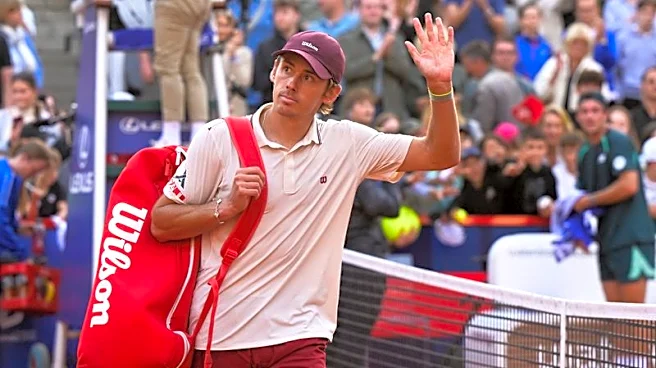
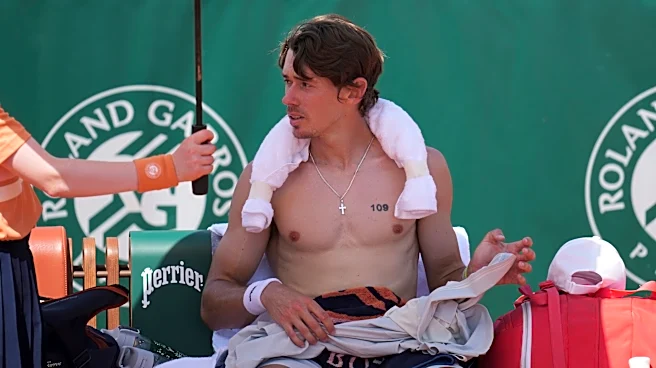
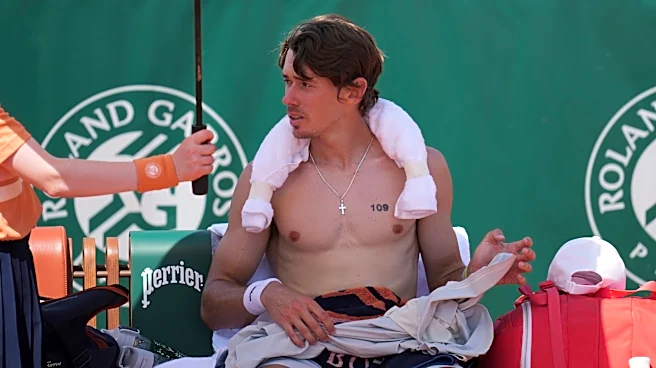
Czech tennis player Jakub Mensik collapsed on the court after a grueling second-round match at the French Open, where temperatures soared into the mid-30s Celsius due to an ongoing heatwave. Mensik, who defeated Argentina's Mariano Navone in a match lasting
over four hours, experienced severe cramping and exhaustion. Medical staff attended to him with ice packs, and he was eventually taken off the court in a wheelchair. Despite the incident, Mensik plans to continue in the tournament, preparing for a third-round match against Alex de Minaur. The extreme heat has been a challenge for players, with some matches being played under more favorable conditions in the evening.
Why It's Important?
The incident highlights the challenges athletes face in extreme weather conditions, raising concerns about player safety and the scheduling of matches. The French Open, like other major tournaments, must balance the demands of competition with the health and well-being of players. The situation underscores the need for potential adjustments in match scheduling or the implementation of heat-related protocols to prevent similar occurrences. The ongoing heatwave also affects spectators and staff, emphasizing the broader impact of climate conditions on sporting events. This incident may prompt discussions within the tennis community about how to better manage extreme weather during tournaments.
What's Next?
As the French Open progresses, tournament organizers may consider implementing additional measures to protect players from the heat, such as extended breaks or rescheduling matches to cooler times of the day. The incident with Mensik could lead to increased scrutiny of current policies and potentially influence future decisions regarding match scheduling and player safety protocols. Players and coaches may also adjust their strategies to cope with the heat, focusing on hydration and recovery techniques. The broader tennis community may engage in discussions about long-term solutions to address the challenges posed by extreme weather conditions in outdoor sports.