



What's Happening?
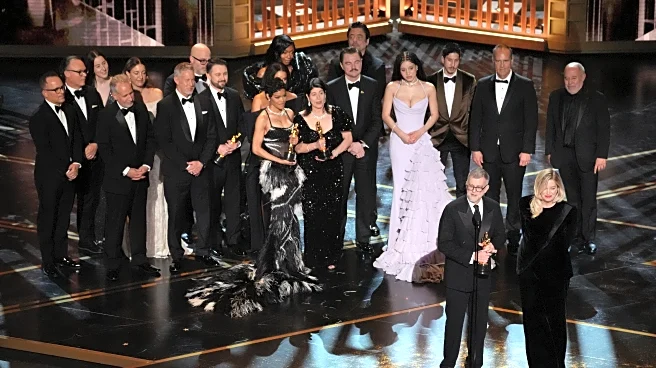
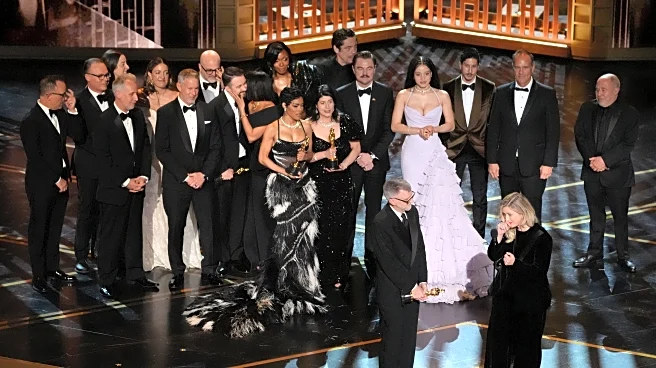
The 2026 Oscars celebrated significant achievements in the film industry, with Paul Thomas Anderson and Amy Madigan taking center stage. Anderson, a highly respected filmmaker, finally secured his first Oscars after 14 nominations, winning Best Adapted
Screenplay, Best Director, and Best Picture for 'One Battle After Another.' His film, a politically charged action comedy, outperformed Ryan Coogler's 'Sinners,' a musically driven vampire thriller. Anderson's acceptance speech highlighted his dedication to his children and the future generation. Meanwhile, Amy Madigan won Best Supporting Actress for her role in 'Weapons,' marking a 40-year gap since her first nomination. Her portrayal of an eccentric aunt in the supernatural thriller was widely acclaimed, and her win was celebrated with an emotional acknowledgment of her husband, Ed Harris.
Why It's Important?
These Oscar wins underscore the evolving landscape of the film industry, where diverse narratives and long-overlooked talents are gaining recognition. Anderson's victories highlight the industry's appreciation for storytelling that addresses contemporary issues, while Madigan's win reflects a growing acknowledgment of seasoned actors who continue to deliver compelling performances. These achievements may inspire filmmakers to pursue bold, innovative projects and encourage the industry to embrace a wider range of voices and stories. The recognition of diverse talents, such as Autumn Durald Arkapaw's historic win in cinematography, further emphasizes the Oscars' role in promoting inclusivity and representation in cinema.
What's Next?
Following these wins, the film industry may see a shift towards more inclusive and diverse storytelling. Filmmakers like Anderson, who have been recognized for their unique narratives, might influence upcoming projects and inspire new directors to explore unconventional themes. The success of films like 'One Battle After Another' and 'Sinners' could lead to increased investment in politically and socially relevant content. Additionally, the recognition of talents from various backgrounds may encourage the Academy to continue diversifying its membership and award categories, fostering a more representative and equitable industry.
Beyond the Headlines
The Oscars' focus on diversity and inclusion could have long-term cultural impacts, encouraging broader societal acceptance and understanding of different perspectives. The celebration of films that tackle complex issues may also contribute to public discourse, prompting audiences to engage with challenging topics. Furthermore, the recognition of seasoned actors like Madigan highlights the value of experience and longevity in the industry, potentially influencing casting decisions and career trajectories for older actors. This shift towards inclusivity and representation may also inspire other award ceremonies to adopt similar practices, promoting a more equitable entertainment landscape.