
What's Happening?
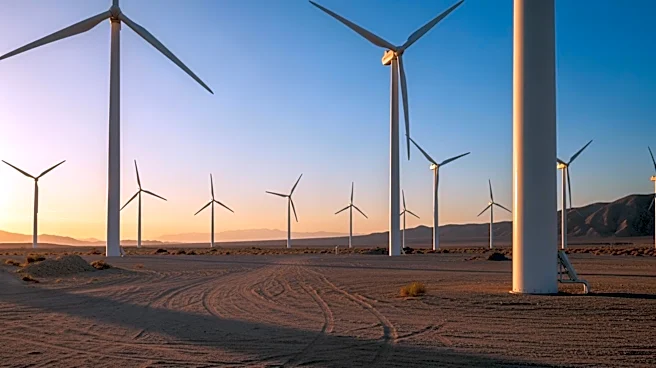
The SunZia Wind Project, the largest wind farm in the United States, is poised to begin commercial operations. Located in New Mexico, the project boasts a net summer generating capacity of 3,650 megawatts
(MW) with 916 wind turbines. Pattern Energy initiated construction in 2023 after nearly two decades of planning and permitting. The wind farm spans three counties, with 242 turbines in San Miguel and Lincoln counties and 674 turbines in Lincoln and Torrance counties. By April 2026, some turbines were already contributing power to the grid during a testing phase. The SunZia project will significantly increase New Mexico's wind capacity from 3,997 MW to 7,647 MW, making wind energy account for 45% of the state's capacity mix. The electricity generated will primarily be exported to Arizona and Southern California via the SunZia Transmission Project, a 550-mile high voltage direct current line.
Why It's Important?
The SunZia Wind Project represents a major advancement in renewable energy infrastructure in the United States. By doubling New Mexico's wind capacity, it positions the state as a leader in wind energy production. The project's ability to export electricity to neighboring states like Arizona and California underscores its regional significance, potentially reducing reliance on fossil fuels and contributing to cleaner energy grids. This development aligns with broader national and global efforts to transition to renewable energy sources, addressing climate change and promoting energy sustainability. The economic impact is also notable, as the project could create jobs and stimulate local economies in the regions involved.
What's Next?
As the SunZia Wind Project begins commercial operations, stakeholders will likely monitor its performance and integration into the regional energy grid. The project's success could influence future renewable energy projects and policies, encouraging further investment in wind and other renewable sources. Additionally, the transmission line's capacity to deliver power to California may prompt discussions on expanding similar infrastructure to support interstate energy distribution. Environmental groups and policymakers may also evaluate the project's impact on local ecosystems and communities, ensuring sustainable practices are maintained.