





What's Happening?
Volkswagen's autonomous mobility subsidiary, MOIA America, in partnership with Uber, has commenced on-road testing of autonomous ID. Buzz vehicles in Los Angeles. This marks the initial phase of a deployment aimed at offering commercial rides with human
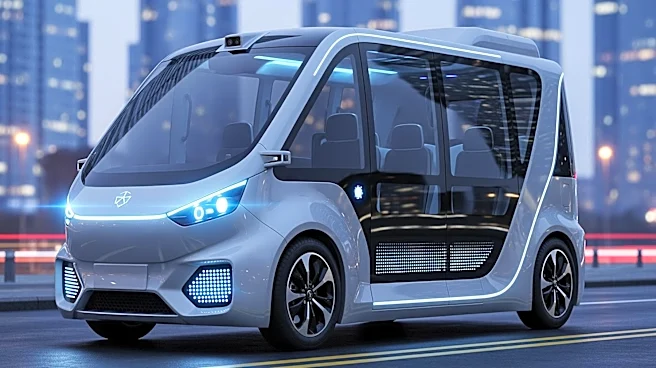
safety operators by the end of 2026, transitioning to fully driverless service by 2027. The testing involves approximately 10 vehicles, with plans to expand to over 100 vehicles for real-world validation before commercial service begins. The ID. Buzz AD vehicles are equipped with a 27-sensor suite, including cameras, LiDAR units, and radars, integrated with Mobileye's Drive platform for decision-making. The vehicles are designed to seat up to six passengers, featuring powered sliding doors for practicality in group ride-hailing scenarios.
Why It's Important?
The testing of autonomous vehicles in Los Angeles represents a significant step in the advancement of autonomous mobility, potentially transforming urban transportation. The collaboration between Volkswagen and Uber leverages Uber's platform, which millions of riders already use, to introduce autonomous vehicles into real-world operations. This development could lead to increased efficiency in ride-hailing services, reduced traffic congestion, and lower emissions. The success of this initiative may set a benchmark for other cities and companies looking to implement autonomous vehicle technology, influencing regulatory frameworks and public acceptance of driverless transportation.
What's Next?
MOIA America plans to scale its operations to more than 500 autonomous vehicles in Los Angeles by the third quarter of 2027, with further expansion to over 1,000 vehicles across additional U.S. cities. Before commercial service can commence, MOIA must obtain a commercial deployment permit from the California Department of Motor Vehicles and a ride-hailing permit from the California Public Utilities Commission. The current testing phase serves as both a technical validation and a demonstration of safe operation, which regulators will scrutinize before granting broader permissions.