


What's Happening?
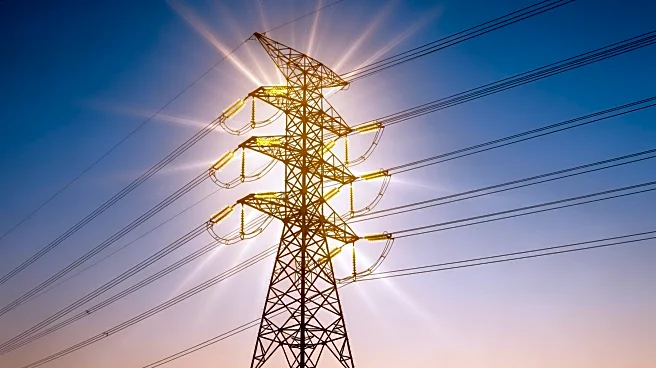
FirstEnergy and Transource Energy have received approval for a joint venture aimed at enhancing grid capacity in Ohio. The project, developed through Grid Growth Ventures, involves constructing 300 miles of new 765 kilovolt lines and upgrading several substations. This initiative is designed to support the increasing electricity demand driven by new manufacturing facilities, data centers, and electric vehicles. FirstEnergy President Mark Mroczynski emphasized the strategic timing of this venture, aligning with the Federal Energy Regulatory Commission's push for efficient regional transmission development. American Electric Power President Doug Cannon highlighted the company's extensive experience in building extra-high voltage lines, which will
be crucial in addressing the region's evolving energy needs.
Why It's Important?
The approval of this project is significant as it addresses the growing electricity demand in Ohio, a state experiencing economic growth and increased industrial activity. By enhancing grid capacity, the project aims to ensure reliable power supply, which is essential for supporting new industries and maintaining economic momentum. The collaboration between FirstEnergy and Transource Energy also reflects a broader trend of regional transmission development encouraged by federal regulators. This initiative not only promises to improve service reliability but also positions Ohio as a hub for future economic development, potentially attracting more businesses and investments to the region.
What's Next?
As the project moves forward, stakeholders will likely focus on the implementation phase, ensuring that the construction of new lines and substation upgrades proceed smoothly. The collaboration between FirstEnergy and Transource Energy will be crucial in managing the project's logistics and addressing any challenges that arise. Additionally, the project may prompt further discussions among policymakers and industry leaders about the need for similar initiatives in other regions facing rising electricity demand. The success of this venture could serve as a model for future grid expansion projects across the United States.