







What's Happening?
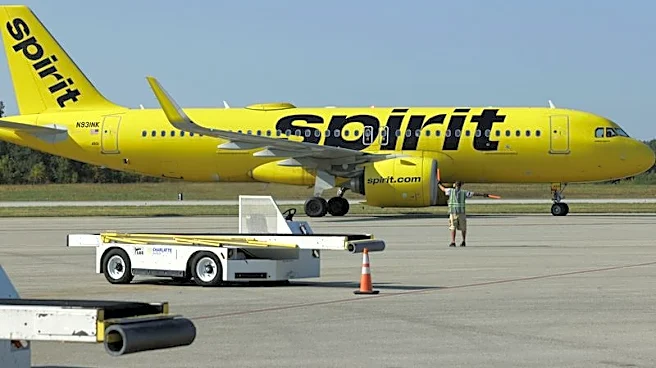
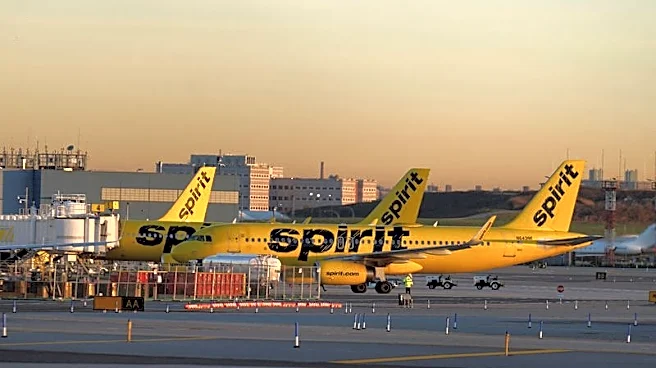
The Trump administration is reportedly considering a $500 million bailout for Spirit Airlines, which is currently navigating bankruptcy. This potential deal could result in the federal government acquiring up to a 90% stake in the low-cost carrier. Aviation
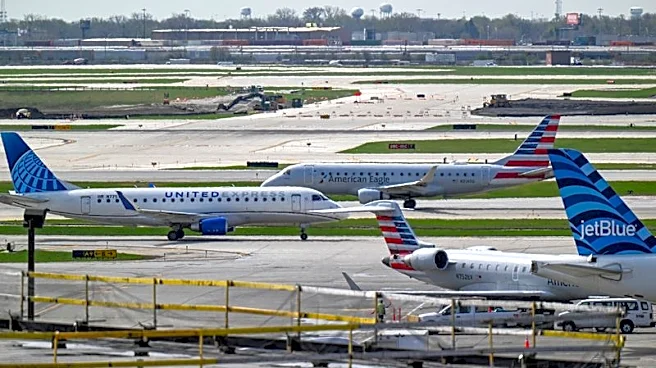
consultant Mike Boyd suggests that this situation is unlikely to disrupt summer travel plans for most Americans, although there may be some uncertainty for passengers already booked on Spirit flights. Aviation expert Mike Coffield warns that government intervention could lead to higher fares and be unfair to other airlines. He argues that government involvement should be reserved for national crises. If Spirit were to cease operations, other airlines like American, Southwest, and JetBlue could absorb the displaced workforce. The bailout could also impact competitors such as Frontier Airlines and JetBlue, potentially weakening them.
Why It's Important?
The potential bailout of Spirit Airlines by the Trump administration could have significant implications for the U.S. aviation industry. If the government acquires a substantial stake in Spirit, it may raise concerns about market competition and fare increases. The move could also set a precedent for government intervention in the airline industry, which some experts argue should be limited to national crises. The bailout could help maintain low-cost travel options for consumers, but it may also disrupt the competitive balance among airlines. Additionally, the government's dual role as both regulator and owner of Spirit Airlines could raise safety concerns.
What's Next?
If the bailout proceeds, Spirit Airlines would receive initial funding to continue operations during bankruptcy, with the possibility of converting this into long-term financial support. The Trump administration will continue to monitor the situation and the overall health of the U.S. aviation industry. The outcome of this bailout could influence future government decisions regarding airline industry interventions. Stakeholders, including other airlines and consumer advocacy groups, may respond to the potential market impacts and regulatory implications of the government's involvement.