





What's Happening?
Archwood Group, a timber manufacturer based in North Wales, has achieved its fifth consecutive Planet Mark certification. This certification is a testament to the company's ongoing efforts to reduce its carbon footprint and improve sustainability practices.
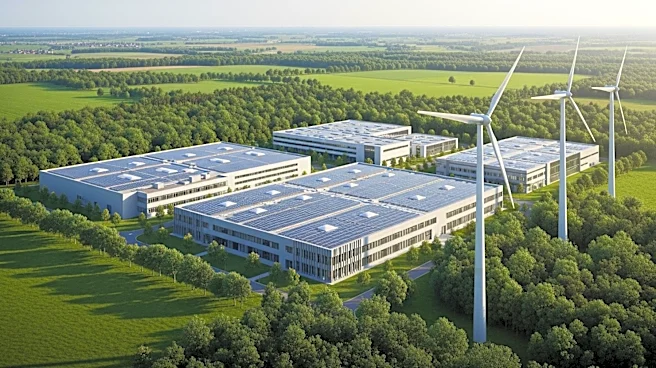
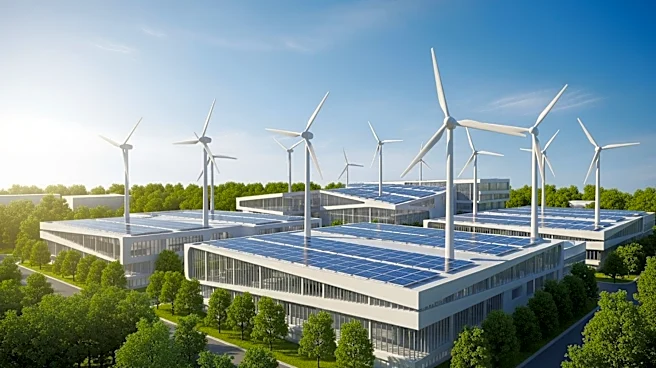
Since joining the UN's Race to Zero campaign in 2021, Archwood Group has reduced its Scope 1 and 2 emissions by 73% against its baseline year. The company has made significant progress in energy generation, electrification, waste reduction, and responsible sourcing. Key achievements include the installation of 2,600 solar panels, which generate 40-50% of the factory's electricity, and the recycling of 100% of wood waste.
Why It's Important?
Archwood Group's achievement of the Planet Mark certification highlights the growing importance of sustainability in the manufacturing sector. By significantly reducing its emissions and adopting renewable energy sources, the company is setting a benchmark for environmental responsibility. This progress not only enhances Archwood Group's reputation but also aligns with global efforts to combat climate change. The company's commitment to sustainability can attract environmentally conscious consumers and investors, potentially leading to increased market share and financial performance. Furthermore, Archwood's initiatives support broader societal goals, such as reducing carbon emissions and promoting sustainable resource management.
What's Next?
Looking ahead, Archwood Group has set ambitious targets to further its sustainability efforts. By 2028, the company aims to self-generate 100% of its renewable energy needs. Additionally, it plans to decarbonize its HGV fleet by 2029 and achieve a 50% reduction in total emissions by 2030. The ultimate goal is to reach Net Zero by 2050. To achieve these targets, Archwood will continue to collaborate with suppliers and partners to reduce emissions across its supply chain. The company's ongoing commitment to sustainability will likely influence its strategic decisions and operational practices in the coming years.