



What's Happening?
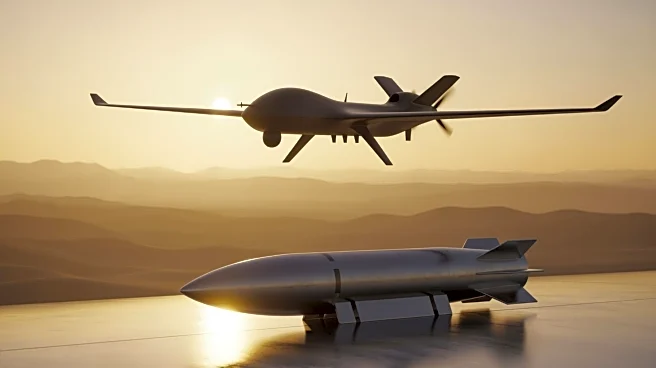
VisionWave Holdings, Inc., a Delaware-based technology company, has released its annual 10-K report, revealing substantial financial losses. The company, which specializes in advanced AI and autonomous solutions for defense and industrial applications, reported a net loss of $6.55 million. This loss is attributed to high operating expenses, which totaled $6.74 million, without corresponding revenue. VisionWave's business model focuses on multi-domain operations across air, ground, and sea environments, with a strong emphasis on real-time threat detection and autonomous response. Despite the financial setbacks, the company is actively pursuing strategic partnerships and joint ventures to expand its market reach. Notably, VisionWave has entered
into agreements with AIPHEX LTD and VEDA Aeronautics to collaborate on defense technology projects, including Indian Ministry of Defense procurement programs.
Why It's Important?
The financial losses reported by VisionWave Holdings highlight the challenges faced by companies in the defense and technology sectors, particularly those investing heavily in research and development without immediate revenue streams. The company's strategic focus on AI and autonomous solutions positions it in a competitive market with significant growth potential, especially in high-demand regions like North America, the Middle East, and Asia-Pacific. VisionWave's efforts to form strategic alliances and joint ventures are crucial for its expansion and innovation goals. These partnerships could enhance its product offerings and market presence, potentially leading to future revenue growth. However, the company's reliance on external capital and strategic partnerships underscores the financial risks and market pressures it faces.
What's Next?
VisionWave Holdings plans to continue leveraging its strategic partnerships to drive innovation and expand its global market presence. The company intends to raise additional capital through equity sales under a Standby Equity Purchase Agreement to support its growth initiatives. As VisionWave transitions its products into manufacturing, securing commercial orders will be a critical next step. This will require further capital investment and operational readiness. The company must also navigate regulatory challenges and market competition to achieve its commercialization goals. VisionWave's ability to balance immediate commercialization opportunities with ongoing innovation will be key to its long-term success.
Beyond the Headlines
VisionWave's financial and strategic maneuvers reflect broader trends in the defense technology sector, where companies are increasingly focusing on AI and autonomous systems. The company's emphasis on strategic partnerships highlights the importance of collaboration in driving technological advancements and market expansion. However, VisionWave's financial strategy, including the issuance of shares under the SEPA, poses risks of stockholder dilution and potential financial strain. The evolving regulatory environment for AI and defense applications adds another layer of complexity, requiring companies like VisionWave to remain agile and compliant. These dynamics underscore the intricate balance between innovation, financial management, and regulatory adherence in the tech-driven defense industry.