









What's Happening?
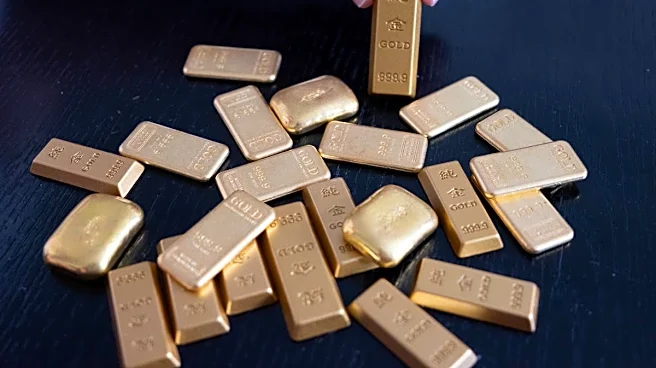
Gold prices have been declining since the United States and Israel launched a military conflict against Iran in late February. The price of gold has dropped from a high of $5,303 per troy ounce on January 28 to $4,235 recently. This decline is attributed
to rising inflation and the potential for increased interest rates by central banks. The conflict has led to Iran blocking the Strait of Hormuz, a critical passage for oil and gas shipments, causing energy prices to surge and contributing to inflation. In the U.S., inflation has reached a three-year high of 4.2%, while the job market remains stable, reducing the likelihood of immediate interest rate cuts.
Why It's Important?
The decline in gold prices is significant as it reflects broader economic concerns, particularly the impact of geopolitical tensions on global markets. Gold is traditionally seen as a safe haven during times of crisis, but the current situation is different due to the interplay of high inflation and potential interest rate hikes. Higher interest rates make gold less attractive as an investment because it does not yield income. The strong U.S. dollar, bolstered by the conflict, further pressures gold prices. This situation affects investors and could influence monetary policy decisions, impacting economic stakeholders globally.
What's Next?
The future of gold prices remains uncertain, with potential developments in the US-Iran conflict and interest rate decisions being key factors. The CME FedWatch tool indicates a more than 50% chance of a rate hike by December, which could further influence gold's value. Any resolution to the conflict might stabilize inflation, potentially benefiting gold prices. However, the market will continue to face headwinds from other economic factors, and investors will need to navigate these complexities in the coming months.