


What's Happening?
Chinese authorities have barred two executives from Manus, a Singapore-based AI firm acquired by Meta, from leaving China. This action comes amid a review of the company's $2 billion acquisition by Meta, a U.S. social media giant. The executives, Xiao
Hong and Ji Yichao, were questioned in Beijing regarding potential violations of foreign direct investment reporting rules. Manus, known for its AI 'agents' capable of complex tasks, was founded in China but relocated to Singapore before its acquisition. The Chinese Ministry of Commerce is investigating the deal, though specific legal violations have not been disclosed.
Why It's Important?
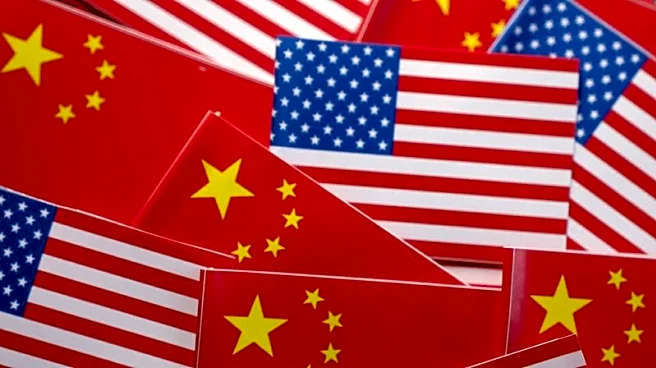
This development highlights the ongoing tensions between China and the U.S. in the tech sector, particularly in artificial intelligence. The restriction of Manus executives is a significant move by China to exert control over its private AI industry and prevent the migration of AI talent to the U.S. This incident underscores the competitive landscape in AI technology, where both nations are vying for dominance. The situation also reflects broader geopolitical dynamics, as the U.S. and China implement measures to protect their technological advancements and intellectual property. The outcome of this investigation could set precedents for future cross-border tech acquisitions.
What's Next?
The investigation's resolution will be closely watched by tech companies and investors, as it may influence future acquisitions and collaborations between U.S. and Chinese firms. Meta has expressed confidence in complying with applicable laws and anticipates a favorable resolution. However, the use of exit bans by China could deter foreign investment and complicate international business operations. The situation may prompt discussions on regulatory frameworks governing foreign investments and the protection of intellectual property in the tech industry.