
What's Happening?
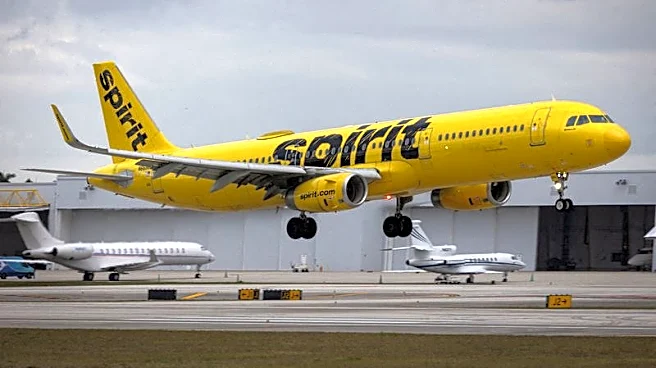
Spirit Airlines, a low-cost carrier, has announced it will cease operations immediately due to financial difficulties. The airline had been seeking a $500 million bailout from the White House, but negotiations
failed to produce a deal. Spirit, known for its ultra-low-cost model, has been struggling for years, facing increased competition from larger airlines that adopted similar pricing strategies. The airline's financial woes were exacerbated by rising fuel costs and a failed merger with JetBlue, which was blocked by the U.S. Justice Department. As a result, all Spirit flights have been canceled, and customer service is no longer available. The Department of Transportation is coordinating with other airlines to assist stranded passengers by offering capped fares and helping Spirit employees find new jobs.
Why It's Important?
The shutdown of Spirit Airlines marks a significant shift in the U.S. airline industry, particularly affecting budget-conscious travelers who relied on its low fares. The absence of Spirit is expected to reduce competition, potentially leading to higher airfares on routes previously served by the airline. This development highlights the challenges faced by low-cost carriers in maintaining a competitive edge against larger airlines with more resources. The situation also underscores the impact of external factors, such as fuel prices and regulatory decisions, on the viability of airlines. The closure of Spirit could lead to job losses for its 17,000 employees, although other airlines are stepping in to offer employment opportunities.
What's Next?
In the wake of Spirit's closure, other airlines are expected to fill the void by increasing their presence on routes previously dominated by Spirit. The Department of Transportation is working to ensure that affected passengers can rebook their travel at reasonable rates. Additionally, the airline industry may see further consolidation as remaining carriers seek to expand their market share. The situation also raises questions about the future of low-cost carriers and their ability to compete in a market dominated by larger airlines. Policymakers may need to consider regulatory measures to ensure fair competition and protect consumer interests.