



What's Happening?
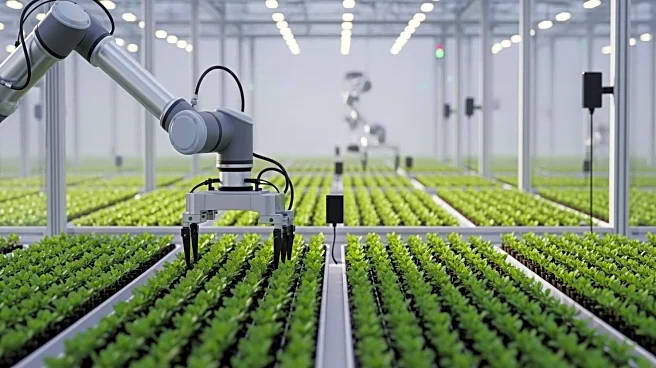
The agricultural sector is undergoing a significant transformation with the integration of robotics and smart farming technologies. This shift is driven by the need to enhance resilience and productivity in agriculture. The focus is on automating the fragile and manual steps of plant propagation, which is crucial for scaling elite plant varieties quickly and cleanly. Edge AI plays a pivotal role in this transformation by enabling real-time data processing directly on machines, allowing robots and sensors to react instantly to changing environmental conditions. This technological advancement is crucial for addressing the growing demand for food as the global population increases. The adoption of interoperable platforms like Agrirouter 2.0 facilitates
seamless data exchange across different agricultural systems, enhancing operational efficiency.
Why It's Important?
The integration of robotics and smart farming technologies is vital for the future of agriculture, particularly in addressing the challenges of food security and sustainability. By automating repetitive and risky tasks, these technologies allow human labor to focus on more critical aspects of farming, such as ensuring stable and sustainable yields. The use of edge AI and IoT sensors transforms agriculture into an integrated system capable of timely actions based on real-time data. This not only improves productivity but also enhances resilience against environmental unpredictability. The development of a shared digital language and updated safety standards for agricultural robotics further supports the safe and efficient collaboration between humans and machines, fostering innovation in the sector.
What's Next?
The next steps in the evolution of agricultural robotics and smart farming involve further investment in interoperable and biology-aware automation systems. This will require collaboration between technology developers, farmers, and policymakers to ensure the widespread adoption of these technologies. The focus will be on overcoming the bottleneck in plant propagation by advancing tissue culture methods and scaling elite plant varieties. As these technologies become more integrated into farming practices, they are expected to significantly contribute to global food security and environmental sustainability.
Beyond the Headlines
The deeper implications of this technological shift in agriculture include ethical considerations regarding the balance between automation and human labor. While robotics and AI can enhance productivity, there is a need to ensure that these advancements do not lead to job displacement without adequate support for affected workers. Additionally, the reliance on digital infrastructure raises concerns about data security and privacy, necessitating robust measures to protect sensitive agricultural data. The long-term success of these technologies will depend on addressing these ethical and legal challenges while promoting sustainable agricultural practices.