
What's Happening?
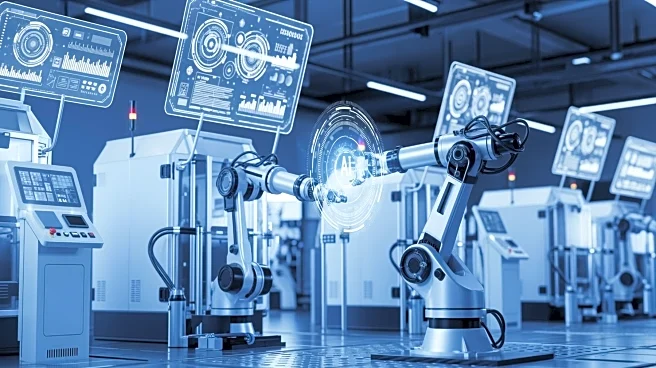
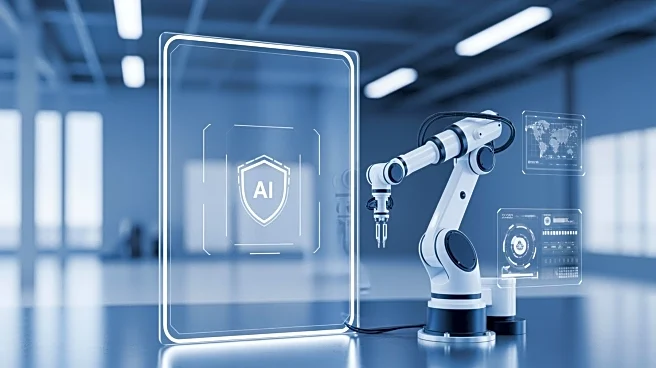
The manufacturing industry is undergoing a significant transformation driven by the integration of automation technology and Physical AI. This new era of manufacturing focuses on creating intelligent, interconnected ecosystems that optimize production,
reduce waste, and enhance operational safety. The concept of Physical AI involves algorithms that interact directly with the physical world, enabling machines to perceive, analyze, and react in real time. This shift requires a seamless integration of software algorithms with robust physical infrastructure, ensuring reliable data transmission and precise execution of commands.
Why It's Important?
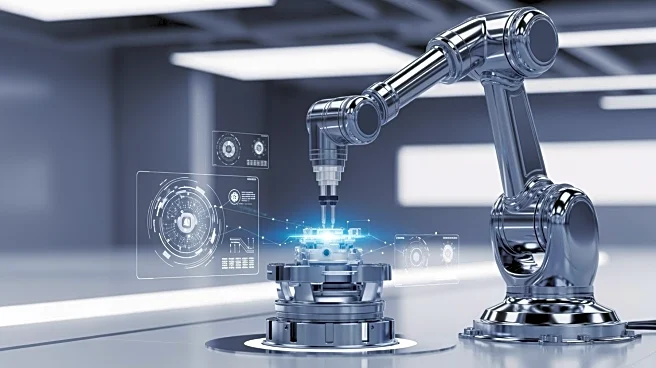
The adoption of automation technology and Physical AI is crucial for the manufacturing industry to remain competitive in a rapidly evolving landscape. By leveraging advanced robotics and AI, manufacturers can achieve higher levels of efficiency and productivity, while also reducing operational costs. The focus on reliable hardware and connectivity solutions is essential to support the complex data streams required for smart manufacturing. This transformation not only enhances the capabilities of individual factories but also contributes to the broader goal of creating sustainable and resilient industrial ecosystems.
What's Next?
As the manufacturing industry continues to embrace automation technology, companies will need to invest in high-quality hardware and connectivity solutions to support their digital transformation efforts. The development of modular and flexible production lines will be key to accommodating custom orders and rapid product iterations. Additionally, the integration of edge computing and ultra-low latency networks will enable faster and more accurate responses to changes in the production environment. The future of manufacturing will likely see the emergence of self-healing networks and highly adaptable robotic systems, further enhancing the industry's ability to innovate and grow.