
What's Happening?
The Agriculture IoT Market is experiencing significant growth, expanding from USD 9.02 billion in 2025 to USD 9.51 billion in 2026, with projections indicating a market value of USD 13.25 billion by 2032.
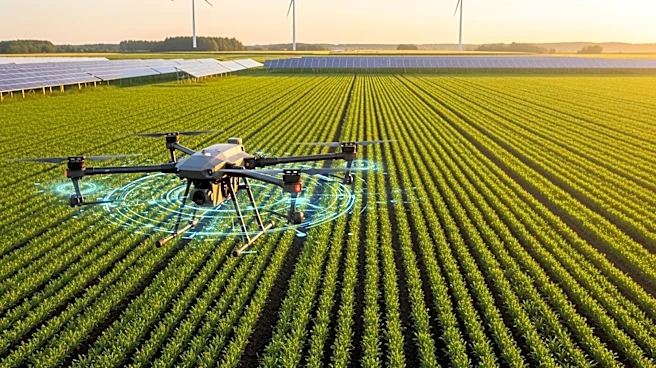
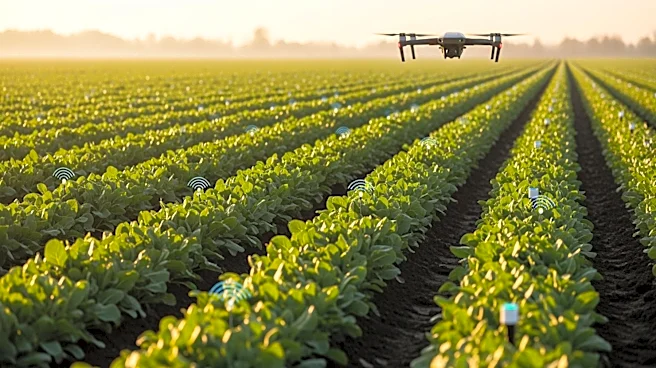
This growth is driven by the adoption of connected devices, real-time data analytics, and automation by agribusinesses and commercial farms. These technologies are being used to improve operational efficiency and promote sustainable practices. The market is characterized by a shift from basic remote monitoring to integrated, real-time intelligence systems that enhance decision-making and resource allocation. Additionally, there is a move towards outcome-based services, such as managed operations and analytics subscriptions, which offer recurring revenue opportunities. Interoperability and robust data governance are becoming crucial for compliance and effective data sharing.
Why It's Important?
The expansion of the Agriculture IoT Market is significant for the agricultural sector as it promises to enhance productivity and sustainability. By leveraging IoT technologies, farms can optimize resource use, reduce waste, and improve crop yields, which is crucial in the face of global food security challenges. The shift towards real-time intelligence and outcome-based services can lead to more resilient supply chains and better compliance with regulatory standards. This technological advancement also opens up new business models and revenue streams, potentially transforming the economic landscape of agriculture. Stakeholders in the agricultural value chain, including technology providers and farmers, stand to benefit from increased efficiency and competitive advantage.
What's Next?
As the Agriculture IoT Market continues to grow, stakeholders are likely to focus on enhancing interoperability and data governance to support compliance and data sharing. The adoption of flexible architectures and modular hardware will allow for adaptation to local infrastructure and evolving technology needs. This will protect investments and ensure long-term sustainability. Additionally, there will be an increased demand for traceability and sustainable practices, driving broader IoT adoption beyond traditional farming to include specialty crops and livestock management. The market is poised for further innovation and strategic partnerships across the value chain.
Beyond the Headlines
The integration of IoT in agriculture not only promises economic benefits but also raises ethical and cultural considerations. The reliance on technology could lead to concerns about data privacy and the digital divide between large commercial farms and smaller, less technologically advanced operations. Ensuring equitable access to these technologies and addressing potential job displacement due to automation will be important considerations for policymakers and industry leaders. Furthermore, the emphasis on sustainability aligns with global environmental goals, potentially influencing cultural attitudes towards farming and food production.