

What's Happening?
Treasury yields experienced a notable decline as optimism grew regarding a potential peace agreement between the United States and Iran. The yield on the 10-year Treasury fell by more than 3 basis points to 4.275%, while the 2-year yield decreased by over
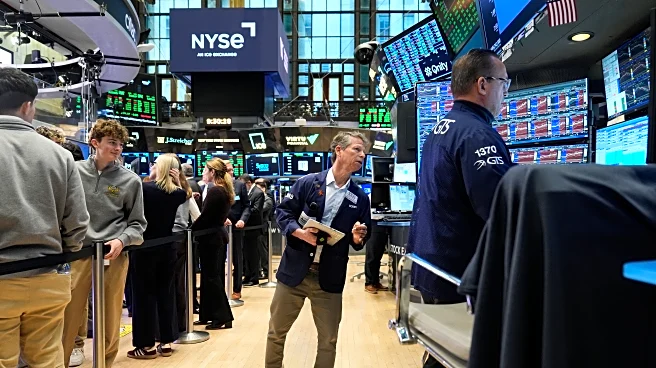
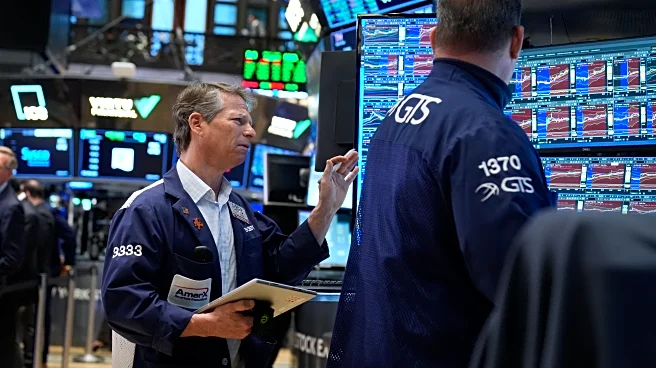
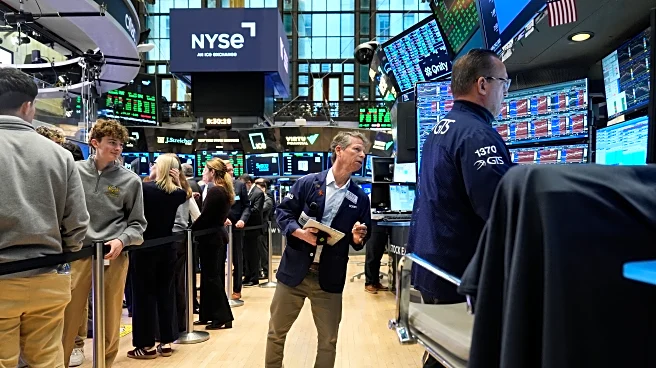
4 basis points to 3.758%. Conversely, the 30-year Treasury yield saw an increase of more than 2 basis points, reaching 4.869%. These movements followed President Trump's announcement that American forces would withdraw from Iran within 'two or three weeks,' signaling an end to the conflict irrespective of a formal deal. This development has positively impacted investor sentiment, leading to significant gains in U.S. equities, with the Dow, S&P 500, and Nasdaq Composite all posting substantial increases.
Why It's Important?
The decline in Treasury yields reflects a shift in investor sentiment driven by the prospect of reduced geopolitical tensions between the U.S. and Iran. This potential resolution could stabilize global markets, particularly in sectors sensitive to geopolitical risks such as energy and defense. The announcement by President Trump suggests a strategic pivot in U.S. foreign policy, potentially reducing military expenditures and reallocating resources domestically. The positive reaction in the stock market indicates investor confidence in a more predictable geopolitical landscape, which could foster economic growth and stability. However, the situation remains fluid, and the actual impact will depend on the developments in the coming weeks.
What's Next?
As the U.S. prepares to withdraw its forces from Iran, attention will turn to the implications for regional stability and international relations. The closure of the Strait of Hormuz remains a critical concern, as it is a vital passage for global oil shipments. The U.S. may engage in diplomatic efforts to ensure the security of this strategic waterway. Additionally, upcoming economic reports, including retail sales and employment data, will be closely monitored to assess the broader economic impact of these geopolitical developments. Stakeholders in the energy sector and international trade will be particularly attentive to any shifts in policy or market conditions.