




What's Happening?
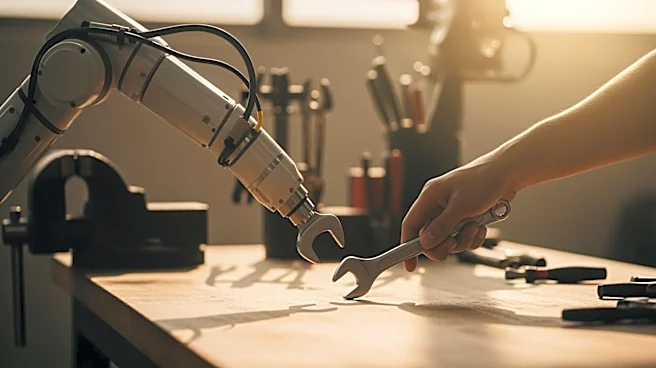
Artificial intelligence is significantly altering the U.S. job landscape, moving roles from the tech industry to skilled trades. According to LinkedIn data, there are currently 1.3 million people in AI-related tech roles. However, a growing demand for
skilled trades is evident, with wage growth in these sectors reaching up to 30%. The construction sector alone requires nearly 350,000 workers to address current shortages. Despite the positive outlook for blue-collar jobs, AI has been linked to job cuts in white-collar roles, with up to 16,000 U.S. job cuts per month. Companies like Meta have laid off thousands of employees, and experts warn that AI could eliminate up to half of entry-level white-collar jobs. In response, California Governor Gavin Newsom has signed an executive order for state agencies to evaluate support for workers potentially displaced by AI.
Why It's Important?
The shift of jobs from tech to trades due to AI has significant implications for the U.S. economy and workforce. As AI continues to automate tasks traditionally performed by white-collar workers, there is a growing need for skilled tradespeople, which could reshape the labor market. This transition may lead to increased wages and job security in trades, while white-collar workers face job displacement and the need for reskilling. The executive order by Governor Newsom highlights the importance of preparing for these changes, ensuring that workers have the necessary support and training to transition into new roles. The broader impact on industries and public policy will depend on how effectively these challenges are addressed.
What's Next?
As AI continues to evolve, the demand for skilled trades is expected to grow, potentially leading to more educational and training programs focused on these areas. Policymakers and industry leaders may need to collaborate to develop strategies that support workforce transitions and address the skills gap. Companies might also invest in reskilling programs to help displaced workers adapt to new roles. The ongoing dialogue about AI's impact on employment will likely influence future legislation and economic policies aimed at balancing technological advancement with workforce stability.