
What's Happening?
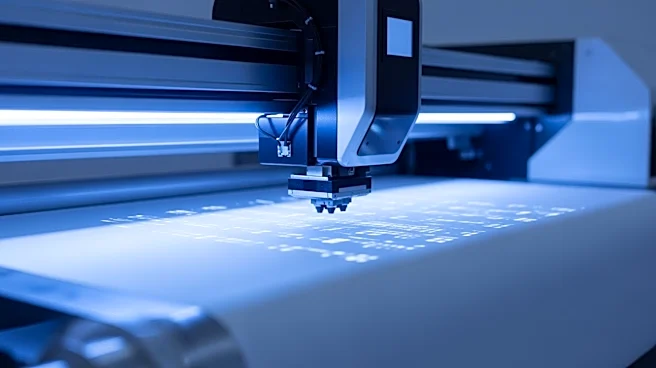
Kornit Digital, a leader in sustainable, on-demand digital fashion and textile production, has announced the launch of its new Atlas MATRIX system at the Konnections 2026 event in Hollywood, Florida. This
system is designed to enable true on-demand manufacturing across various fabric types, including cotton, polyester, and blends, within a single platform. The event, attended by over 500 leaders from the apparel ecosystem, highlights the industry's shift towards demand-driven production. The Atlas MATRIX system aims to remove barriers to digital production at scale by providing consistent retail-quality production across multiple fabrics. Kornit Digital also announced its acquisition of PrintFactory, a cloud-native color and production platform, to enhance its digital production capabilities.
Why It's Important?
The introduction of the Atlas MATRIX system marks a significant shift in the apparel industry towards more agile and sustainable production methods. By enabling on-demand manufacturing, Kornit Digital is addressing the industry's need for faster, more flexible production that can respond in real-time to market demands. This shift is crucial as brands seek to reduce risk, improve margins, and operate more sustainably. The acquisition of PrintFactory further strengthens Kornit's infrastructure, allowing for consistent global fulfillment and expanding its reach into the large global screen-printing market. This development is likely to benefit brands and producers by reducing production complexity and labor requirements, opening new revenue opportunities.
What's Next?
Kornit Digital plans to make the Atlas MATRIX system available for customer delivery starting in early May, with upgrade packages for existing systems. The company will also showcase the system at upcoming global industry events, including the FESPA Global Print Expo in Barcelona. As the apparel industry continues to evolve, stakeholders such as brands, producers, and digital platforms are expected to increasingly adopt on-demand production methods. This could lead to a broader industry transformation, with more companies moving away from traditional production models towards more sustainable and efficient practices.