








What's Happening?
PRAN-RFL Group has successfully revived three previously abandoned factories in Rajshahi, Bangladesh, creating approximately 5,000 jobs. This initiative, conducted under a public-private partnership model, includes the reopening of the Rajshahi Textile
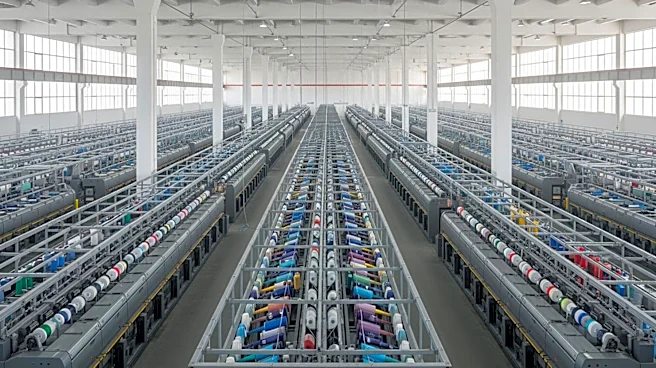
Mill and the Rajshahi Jute Mill, which had been inactive for over two decades. The factories are now producing non-leather footwear, luggage, backpacks, and other goods for export to Europe and North America. The revival of these mills is part of a broader strategy to decentralize industrial activity from major urban centers like Dhaka, providing local employment opportunities and reducing the need for workers to migrate to larger cities.
Why It's Important?
The revival of these mills is significant as it addresses both economic and social challenges in Bangladesh. By creating jobs in less industrialized regions, PRAN-RFL is helping to alleviate urban migration pressures and improve the quality of life for workers who can now stay closer to their families. This move also positions Bangladesh as a competitive player in the global non-leather footwear market, especially as production costs rise in China. The initiative highlights the potential for industrial decentralization to boost local economies and enhance the purchasing power of workers in rural areas.
What's Next?
PRAN-RFL plans to further expand its operations, with investments aimed at increasing production capacity and employment. The company is in discussions with foreign buyers to secure more orders, which could lead to the creation of additional jobs. However, challenges such as the need for skilled labor and reliance on imported raw materials remain. The company is advocating for government support to streamline customs and improve competitiveness, which could facilitate further growth and development in the region.
Beyond the Headlines
This development underscores the potential for public-private partnerships to drive economic growth in underdeveloped areas. It also raises questions about the sustainability of such initiatives, particularly in terms of environmental impact and the long-term viability of relying on export markets. The success of PRAN-RFL's strategy could serve as a model for other regions seeking to revitalize their industrial sectors and reduce economic disparities.