








What's Happening?
OPEC's oil production has fallen to its lowest level since at least 2000, while U.S. crude inventories continue to decline as refiners increase operations ahead of summer demand. This comes as OPEC has once again lowered its 2026 global oil demand growth
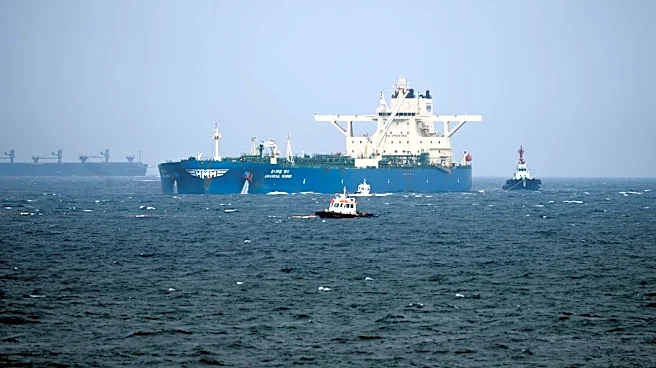
forecast. Concurrently, shipping risks in the Strait of Hormuz and the Red Sea remain elevated, with dark tanker traffic obscuring crude flow visibility and Houthi threats adding uncertainty to global trade routes. Despite a sharp drop in oil prices due to diplomatic hopes, the underlying fundamentals of the energy market remain tight, with inventories shrinking and OPEC output constrained.
Why It's Important?
The current situation highlights a significant disconnect between market sentiment and the actual physical fundamentals of the energy market. While traders are pricing in potential diplomatic resolutions, the reality is that the energy supply remains tight, with little room for disruption. This tight supply situation could lead to increased volatility and risk in the market, affecting global energy security and economic stability. The ongoing geopolitical tensions and shipping risks further complicate the situation, potentially leading to significant supply shocks if disruptions persist.
What's Next?
The future of oil prices and market stability will largely depend on the outcomes of ongoing diplomatic negotiations and the ability of OPEC and other producers to manage supply constraints. Any significant geopolitical developments or disruptions in key shipping routes could lead to further volatility in the market. Additionally, the continued growth in energy demand from sectors like AI and data centers will play a crucial role in shaping future energy policies and market dynamics.