






What's Happening?
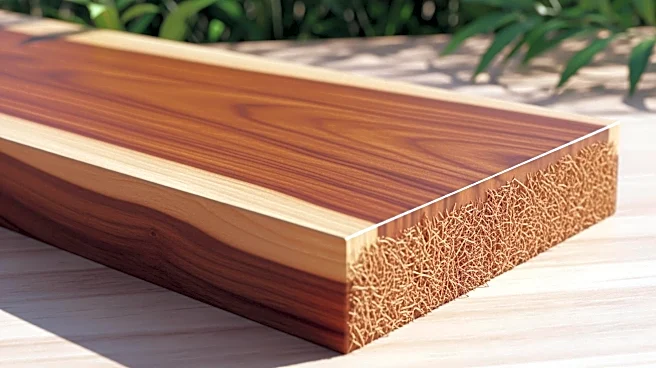
Ecovon, a company focused on sustainable materials, has developed a wood alternative using coconut husks. This innovation eliminates the need for toxic binders and harmful additives, offering a biodegradable product that retains key performance characteristics
such as density and durability. The boards are more resistant to ignition and fire penetration compared to conventional materials and naturally resist rot. By replacing traditional MDF, Ecovon aims to reduce deforestation, lower carbon emissions, and prevent indoor air pollution caused by synthetic resins. The company also supports forest- and agriculture-dependent livelihoods, creating new income streams for farmers and generating local employment opportunities. Ecovon's approach aligns with a circular economy model, turning waste into value and offering a climate-friendly alternative to conventional materials.
Why It's Important?
The development of sustainable materials like Ecovon's coconut husk boards is crucial in addressing environmental challenges such as deforestation and carbon emissions. By providing an alternative to traditional wood products, Ecovon contributes to reducing the environmental footprint of the construction and furniture industries. This innovation supports the transition to a circular economy, where waste is minimized, and resources are used more efficiently. Additionally, the economic benefits of creating new income streams for farmers and generating local employment opportunities highlight the potential for sustainable materials to drive economic growth while preserving the environment. The success of such initiatives can encourage further investment in green technologies and sustainable practices across various industries.