



What's Happening?
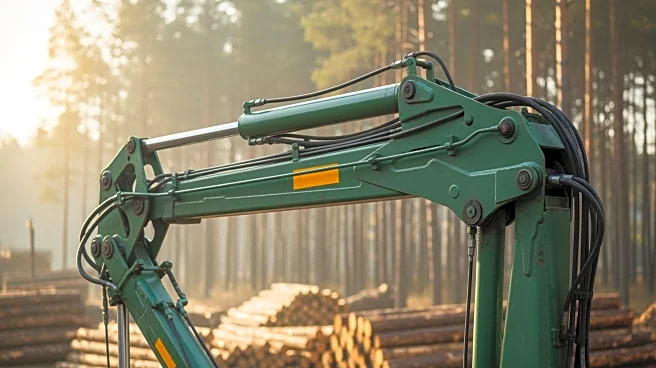
Kesla has announced significant upgrades to its 2225 and 2228 timber cranes, enhancing their performance and operational efficiency. These cranes, part of Kesla's new generation of long-timber cranes, have been improved based on product development and customer
feedback. The 2225 model now offers an optional high-pressure mode, increasing its lifting power for demanding tasks. The 2228 model maintains its robust design with upsized cylinders and twin circuit hydraulics for smoother operation. Both models are designed for tree length and cut-to-length work, featuring high-strength steel and internally routed hydraulics for durability. The cranes also include ergonomic operator stations and advanced control systems to reduce fatigue during long shifts. Additionally, Kesla has secured a bridge financing package to support its financial stability and ongoing business recovery efforts.
Why It's Important?
The upgrades to Kesla's timber cranes are significant for the forestry industry, as they enhance the efficiency and capability of equipment used in long-timber operations. By improving lifting power and operational smoothness, these cranes can better meet the demands of forestry contractors and hauliers, potentially increasing productivity and reducing operational costs. The financial stability provided by the bridge financing package ensures that Kesla can continue its business recovery and maintain its competitive edge in the market. This development is crucial for stakeholders relying on Kesla's equipment for their operations, as it promises continued innovation and support from the company.
What's Next?
Kesla's focus on enhancing its crane models and securing financial stability suggests a commitment to long-term growth and competitiveness. The company is likely to continue its structural assessment process to ensure ongoing business performance and profitability. Stakeholders can expect further innovations and possibly new product offerings as Kesla leverages its financial flexibility to invest in research and development. The forestry industry will be watching closely to see how these developments impact the availability and performance of Kesla's equipment in the market.