




What's Happening?
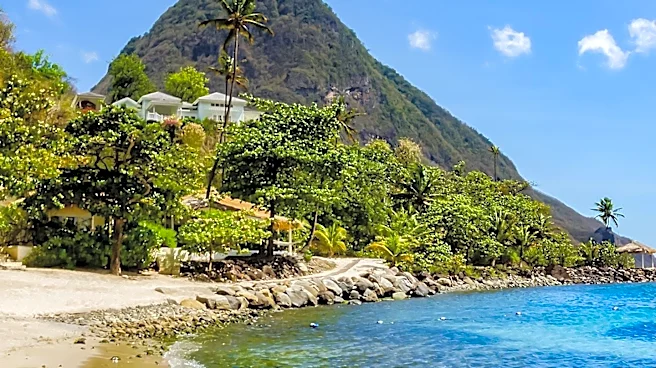
TheLifeCo, a wellness brand with a 20-year history, has launched the Caribbean's first longevity village in St. Lucia, a billion-dollar development focused on health and wellness. The project, led by A'ila Developments, includes three resorts, 500 longevity residences,
and a medical and commercial district. TheLifeCo St. Lucia, the flagship property, offers a physician-led wellness program emphasizing detox and longevity. The program includes medically supervised fasting and biohacking technologies, aiming to provide measurable health improvements. The development is designed to create a community centered around health, with facilities like a 523-acre organic farm supplying fresh produce.
Why It's Important?
This development represents a significant shift in the hospitality industry, focusing on health and longevity rather than traditional leisure. It addresses public health priorities in the Caribbean, such as cardiovascular disease and diabetes, by offering a health-centric community. TheLifeCo's approach could influence how future hospitality projects are designed, emphasizing wellness and community over consumption. The project also highlights the growing trend of integrating health and wellness into travel experiences, potentially setting a new standard for luxury resorts.
What's Next?
TheLifeCo St. Lucia is the first phase of the A'ila longevity village, with subsequent phases including a residence concept and a family hotel. These developments aim to create a multigenerational community, enhancing the social dimension of longevity. The project could attract a diverse range of guests, from those seeking specific health improvements to those interested in a wellness-focused lifestyle. The success of this model may encourage similar developments in other regions, further integrating wellness into the hospitality industry.
Beyond the Headlines
TheLifeCo's approach to wellness, particularly its focus on medically supervised fasting and biohacking, could influence broader health and wellness practices. The emphasis on guest education and personalized care may lead to lasting lifestyle changes for participants, potentially reducing healthcare costs and improving quality of life. The project also raises questions about the role of luxury developments in addressing public health issues, highlighting the potential for private sector initiatives to complement public health efforts.