
What's Happening?
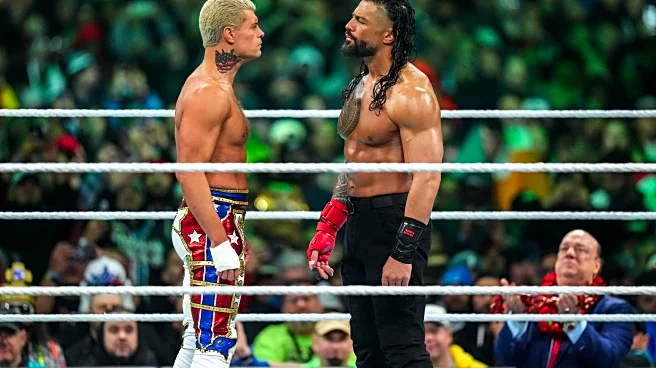
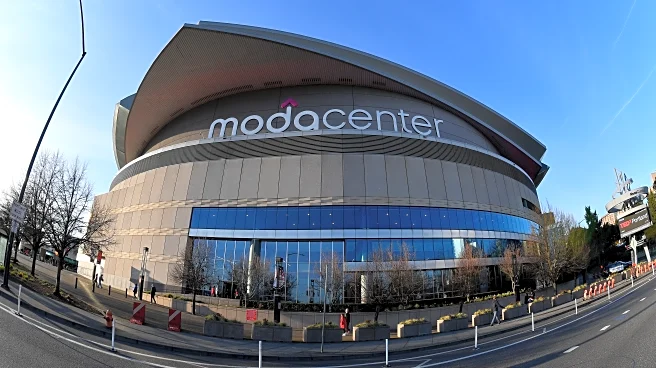
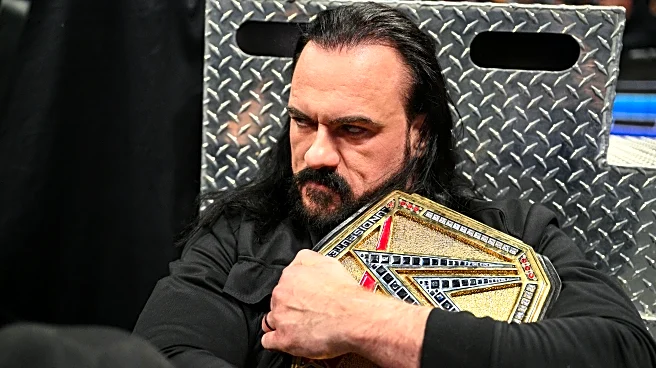
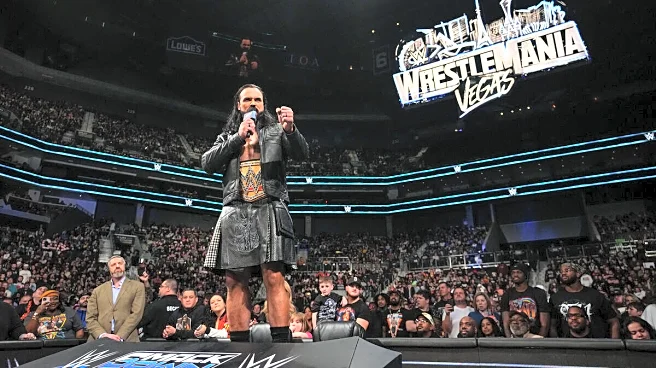
Cody Rhodes reclaimed the Undisputed WWE Championship in a dramatic match against Drew McIntyre during the March 6 episode of WWE SmackDown at the Moda Center in Portland, Oregon. The match concluded with a chaotic sequence involving referee interference
and outside involvement from Jacob Fatu, which led to Rhodes' victory. Following the event, WWE's official Twitter account invited fans to share their reactions, which quickly turned into a wave of criticism. Many fans expressed dissatisfaction with the decision to end McIntyre's title reign abruptly, arguing that he deserved a longer run with the championship. The backlash was not solely directed at Rhodes but also at WWE's creative leadership, with some fans criticizing the storytelling decisions made by Triple H, the company's Chief Content Officer.
Why It's Important?
The backlash against Cody Rhodes' title win highlights ongoing tensions between WWE's creative decisions and fan expectations. The abrupt end to Drew McIntyre's championship reign has sparked debate about the direction of WWE's storytelling, particularly as WrestleMania approaches. This situation underscores the challenges WWE faces in balancing storyline development with fan satisfaction. The criticism directed at Triple H and the creative team suggests that fans are increasingly vocal about their dissatisfaction with current booking decisions. This could impact WWE's viewership and fan engagement if the company does not address these concerns. The outcome of this storyline may influence future creative strategies and the company's approach to fan interaction.
What's Next?
As WrestleMania approaches, WWE will need to navigate the fan backlash and potentially adjust its storytelling strategies to maintain viewer interest. The company may consider addressing fan concerns through future storylines or public statements. Additionally, the development of Cody Rhodes' character and his interactions with other wrestlers will be crucial in shaping the narrative leading up to WrestleMania. WWE's response to the criticism could set a precedent for how it handles similar situations in the future, potentially influencing its creative direction and fan engagement strategies.