







What's Happening?
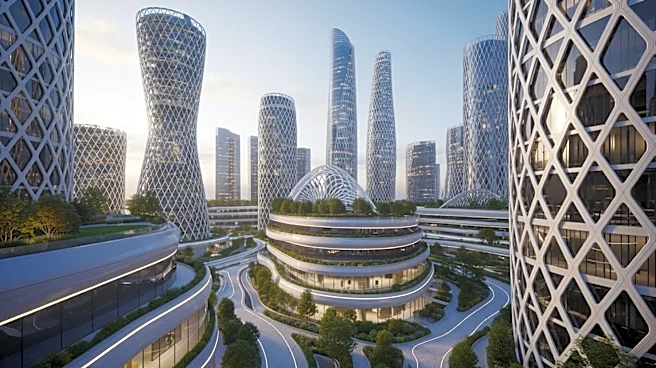
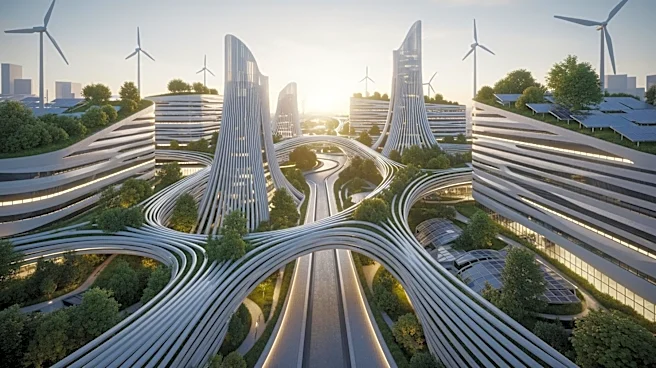
Toyota has developed Woven City, a futuristic experimental community near Mount Fuji, Japan, where new technologies are being tested and developed. Announced at the 2020 CES technology show, the city serves as a real-world lab for Toyota and its partners.
The first residents, known as Weavers, moved in during the fall of 2025, and the community now hosts around 100 people. The city is designed as a 'Proof of Concept' (POC) environment, encouraging experimentation and innovation. Technologies being developed include AI-driven systems, educational tools, and mobility solutions. For instance, a vertical tablet device with projection mapping is being tested for remote learning, and autonomous shuttles are providing transport services. The city also features a coffee shop that uses AI to analyze customer behavior to improve product offerings.
Why It's Important?
Woven City represents a significant step in Toyota's transformation from a traditional automaker to a mobility company. By creating a controlled environment for testing new technologies, Toyota can accelerate innovation and potentially bring successful concepts to market more quickly. The city's focus on AI, robotics, and mobility solutions aligns with global trends towards smart cities and autonomous vehicles. The data collected from residents and visitors can provide valuable insights into consumer behavior and technology performance, which can inform future product development. This initiative could position Toyota as a leader in the integration of technology and urban living, influencing how cities of the future are designed and operated.
What's Next?
As Woven City continues to develop, more residents and companies are expected to join, expanding the scope of experimentation. The city plans to grow in phases, eventually accommodating thousands of people. The technologies tested in Woven City could be adapted for broader applications, such as in Toyota's vehicle lineup or in other urban environments. The success of this project could inspire similar initiatives by other companies and governments, potentially leading to a new era of smart city development. Stakeholders will be watching closely to see which technologies prove viable and how they can be scaled beyond the confines of Woven City.
Beyond the Headlines
Woven City raises important questions about privacy and data usage, as residents willingly share personal data to aid technological development. This model of open data sharing could challenge traditional views on privacy and data protection. Additionally, the city's focus on collaboration between residents and developers highlights a shift towards more participatory approaches in technology development. The ethical implications of such a living lab will need to be carefully managed to ensure that the benefits of innovation do not come at the expense of individual rights.