







What's Happening?
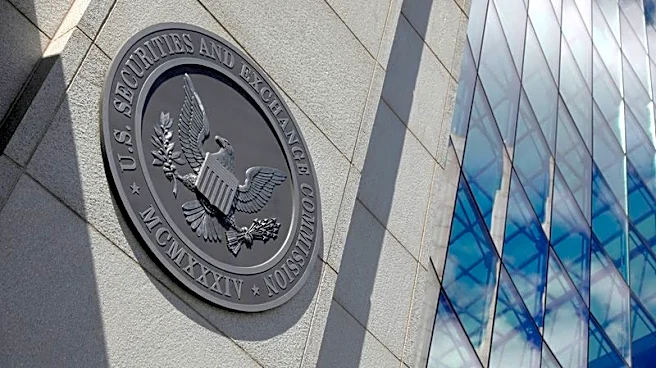
The Supreme Court has unanimously upheld the Securities and Exchange Commission's (SEC) authority to demand disgorgement of ill-gotten gains in securities fraud cases. This decision came in response to a challenge by Ongkaruck Sripetch, who was sentenced
to 21 months in prison for selling unregistered securities in a high-risk penny stock scheme. Sripetch contested the court's order to repay over $3 million, arguing that the SEC should prove individual investor losses. However, the Supreme Court ruled that it is sufficient to demonstrate that Sripetch profited from illegal transactions, with Justice Neil Gorsuch stating that investors may qualify as victims entitled to compensation. The ruling reinforces the SEC's ability to enforce financial penalties in fraud cases, ensuring that profits from illegal activities are returned to investors when feasible.
Why It's Important?
This ruling is significant as it strengthens the SEC's enforcement capabilities in securities fraud cases, allowing it to effectively penalize fraudulent activities and protect investors. By affirming the SEC's authority to demand disgorgement without proving individual investor losses, the Supreme Court supports a broader interpretation of regulatory power, which could deter future securities fraud. This decision impacts the financial industry by reinforcing the legal framework that governs securities transactions, potentially increasing compliance and reducing fraudulent activities. Investors stand to benefit from enhanced protections, while companies involved in securities trading may face stricter scrutiny and penalties for non-compliance.
What's Next?
Following this ruling, the SEC is likely to continue its aggressive enforcement of securities laws, focusing on recouping profits from fraudulent activities. Companies and individuals involved in securities trading may need to reassess their compliance strategies to avoid potential legal challenges and financial penalties. The decision may also prompt legislative discussions on further strengthening investor protections and regulatory oversight in the financial sector. Stakeholders, including financial institutions and regulatory bodies, will closely monitor the implications of this ruling on future enforcement actions and industry practices.
Beyond the Headlines
The Supreme Court's decision may have broader implications for the legal interpretation of regulatory authority in other areas beyond securities fraud. It highlights the judiciary's role in shaping the enforcement landscape and could influence future cases involving regulatory agencies. Additionally, this ruling may encourage other regulatory bodies to seek similar enforcement powers, potentially leading to a more robust regulatory environment across various industries. The decision underscores the importance of maintaining investor trust and confidence in the financial markets, which is crucial for economic stability and growth.