







What's Happening?
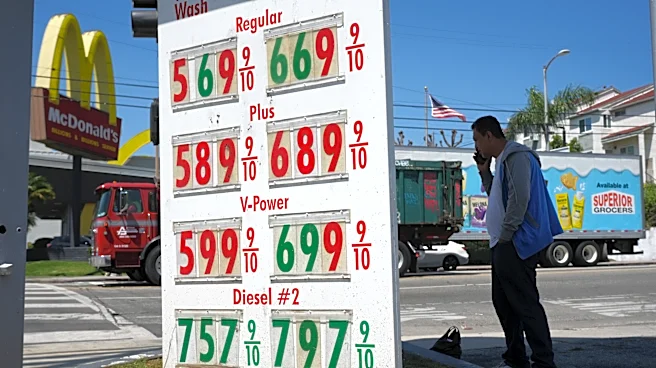
The U.S. economy grew at a 2% annualized pace in the first quarter of 2026, according to the Commerce Department. This growth was driven by business investment and government spending, despite a spike in energy costs linked to the Iran conflict. Core
inflation rose 3.2% year-over-year in March, reflecting persistent price pressures. The Federal Reserve has maintained interest rates at 3.5% to 3.75%, balancing a resilient labor market against inflation that remains above its target. Initial jobless claims have reached their lowest level since 1969, indicating a strong labor market.
Why It's Important?
The economic growth and low unemployment highlight the resilience of the U.S. economy, yet the persistent inflation poses challenges for monetary policy. The Federal Reserve's decision to hold rates steady underscores the complexity of balancing economic growth with inflation control. Rising inflation affects consumer purchasing power and could lead to higher borrowing costs, impacting sectors like housing and consumer goods. The Fed's cautious approach suggests a focus on long-term economic stability, with potential implications for future rate adjustments and economic policy.
What's Next?
The Federal Reserve will continue to assess economic indicators, particularly inflation and employment data, to guide future monetary policy decisions. The ongoing geopolitical tensions and their impact on energy prices will be critical factors in shaping the Fed's approach. Stakeholders, including businesses and consumers, should prepare for potential shifts in interest rates and economic conditions as the Fed navigates these challenges.