



What's Happening?
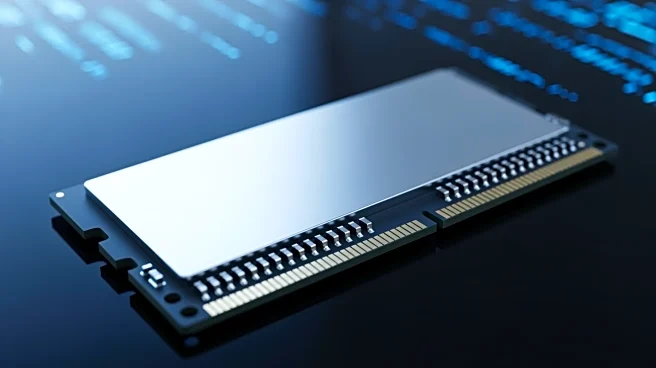
Micron Technology has addressed concerns regarding the rising prices of memory, attributing the increase to an industry-wide shortage rather than company-specific actions. Christopher Moore, Micron's VP of Marketing, emphasized that the demand for memory is being driven by the rapid growth of AI and data centers, which has led to a significant increase in the total addressable market. Micron, along with other memory manufacturers, is working to meet this demand by expanding production capabilities. The company has announced a $100 billion investment in a new manufacturing facility in New York to help alleviate the supply constraints. Despite these efforts, the shortage is expected to persist beyond 2026 due to the sustained demand from AI applications.
Why It's Important?
The memory shortage has significant implications for various sectors, particularly those reliant on AI and data center operations. As memory prices rise, costs for consumers and businesses increase, potentially impacting the affordability and accessibility of technology products. The shortage also highlights the critical role of memory in supporting AI advancements, which are integral to numerous industries, including healthcare, finance, and technology. Micron's investment in expanding manufacturing capacity is a strategic move to secure its position in the market and address the growing demand. However, the ongoing shortage underscores the need for continued innovation and investment in memory production to support future technological advancements.
What's Next?
Micron's new manufacturing facility in New York is expected to be a pivotal development in addressing the memory supply crisis. The facility will undergo rigorous environmental reviews and permit approvals before construction begins. As the industry continues to grapple with supply constraints, other memory manufacturers may also announce similar investments to expand their production capabilities. The ongoing demand from AI applications suggests that the memory shortage could extend into 2028 and beyond, necessitating long-term strategies to balance supply and demand. Stakeholders, including policymakers and industry leaders, may need to collaborate on solutions to ensure a stable supply of memory for critical technological advancements.