



What's Happening?
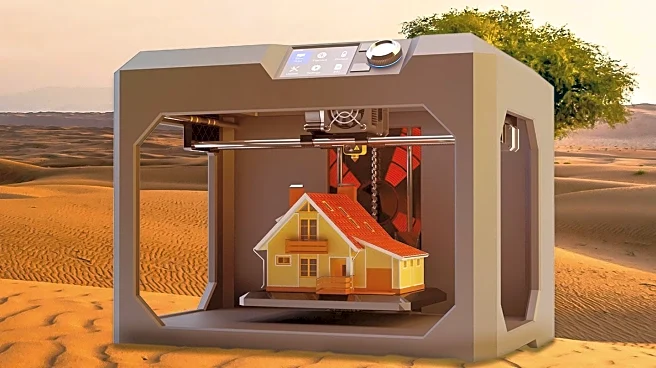
WASP (World’s Advanced Saving Project) has introduced Itaca, a self-sufficient 3D-printed housing model designed to operate independently of traditional infrastructure. Presented at Italian Tech Week, Itaca is constructed using the Crane WASP system, which employs robotic arms to print wall sections rapidly. The structure is designed to support up to four people without connections to electricity, water, or gas networks, promoting a circular micro-economy. The building features a lime-based mixture for walls, reducing carbon emissions compared to conventional materials. It also includes integrated systems for heating, ventilation, and energy generation, with a focus on sustainability and self-sufficiency.
Why It's Important?
The Itaca project represents a significant
advancement in sustainable construction and housing solutions. By utilizing 3D printing technology and local resources, Itaca demonstrates the potential for creating environmentally friendly and self-sufficient living spaces. This model could revolutionize the housing industry by reducing reliance on external infrastructure and minimizing environmental impact. The project aligns with global sustainability goals and offers a blueprint for future developments in eco-friendly construction. It also highlights the role of technology in addressing housing and environmental challenges, potentially influencing policy and industry practices.
What's Next?
The official inauguration of the Itaca project is planned for Spring 2026, marking a milestone in sustainable construction. WASP aims to share the technical solutions as open-source, encouraging adaptation and collaboration in various regions. The project could inspire further research and development in 3D-printed housing and self-sufficient living models. As the construction industry seeks to reduce its carbon footprint, projects like Itaca may become increasingly relevant, prompting discussions on regulatory frameworks and investment in sustainable technologies.