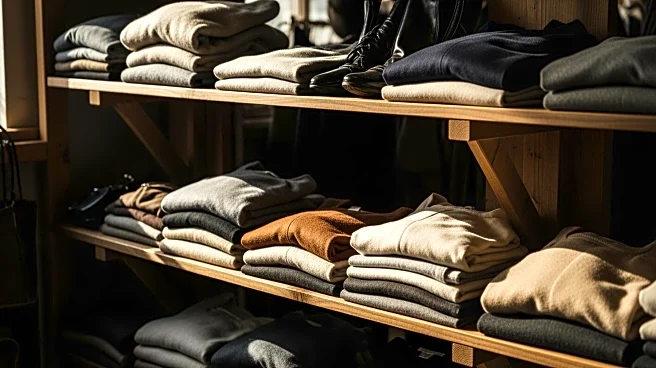

What's Happening?
The holiday shopping season has seen a shift in consumer behavior, with more people opting for thrift stores and fewer returns being made. According to data from Visa and Mastercard, holiday spending has increased
compared to last year. However, economic concerns and higher prices, partly due to tariffs, have led consumers to seek out thrift stores and discount retailers. Data from Placer.ai indicates a rise in thrift store traffic, while Adobe Analytics reports a decrease in return rates, suggesting more deliberate purchasing decisions by consumers.
Why It's Important?
These trends reflect broader economic challenges and changing consumer priorities. The increase in thrift store shopping indicates a shift towards more sustainable and cost-effective purchasing habits, which could impact traditional retail models. The decrease in returns suggests that consumers are becoming more conscientious about their spending, potentially leading to more stable retail operations. These changes could influence how retailers strategize their sales and marketing efforts, focusing more on value and sustainability to attract budget-conscious consumers.
What's Next?
Retailers may need to adapt to these changing consumer behaviors by enhancing their offerings in thrift and discount segments. Traditional retailers might face increased competition from thrift stores, prompting them to innovate and offer more value-driven products. Additionally, the focus on sustainability could lead to more retailers adopting eco-friendly practices to appeal to environmentally conscious consumers. As the economic landscape evolves, retailers will need to remain agile and responsive to maintain their market share.