







What's Happening?
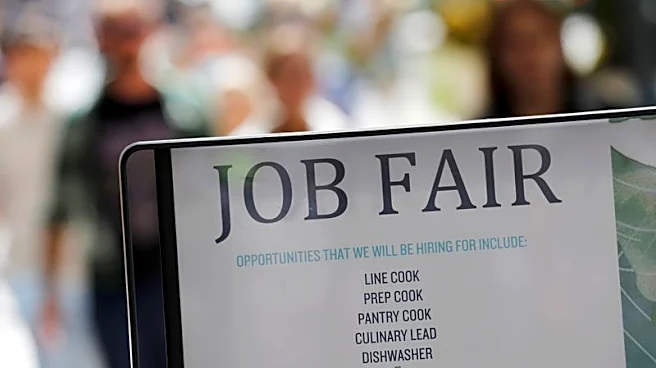
The U.S. Labor Department reported an increase in jobless claims to 215,000, up from 210,000 the previous week. Despite this rise, layoffs remain low, indicating that most companies have not resorted to significant job cuts. The four-week moving average
of claims rose to 209,000. The labor market shows resilience, with job creation averaging 76,000 per month from January to April. However, the economic outlook is clouded by the Iran war, which has led to higher energy prices and economic uncertainty.
Why It's Important?
The stability in jobless claims suggests a resilient labor market, which is crucial for economic stability. However, the ongoing Iran conflict and resulting energy price hikes pose risks to economic growth and consumer spending. The labor market's performance will be a key factor in shaping economic policy and business strategies. The geopolitical tensions could lead to further economic disruptions, affecting various sectors and potentially influencing the Federal Reserve's monetary policy decisions.
What's Next?
The labor market's performance will continue to be a focal point for economic stakeholders. The Federal Reserve and policymakers will likely monitor employment trends closely to assess the broader economic impact of the Iran conflict. Businesses may need to adjust their strategies to navigate the uncertainties posed by geopolitical tensions and rising costs. The potential for further economic disruptions will require careful planning and adaptation by both businesses and consumers.