




What's Happening?
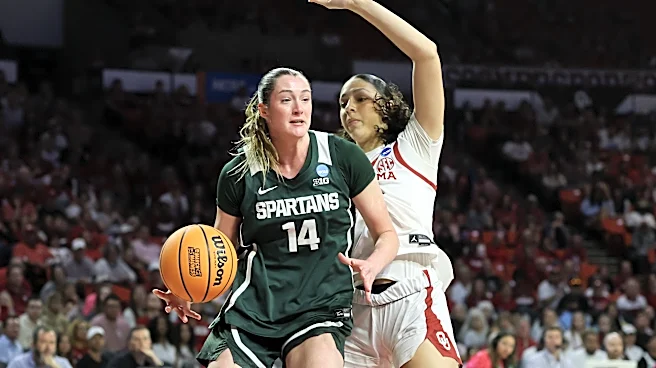
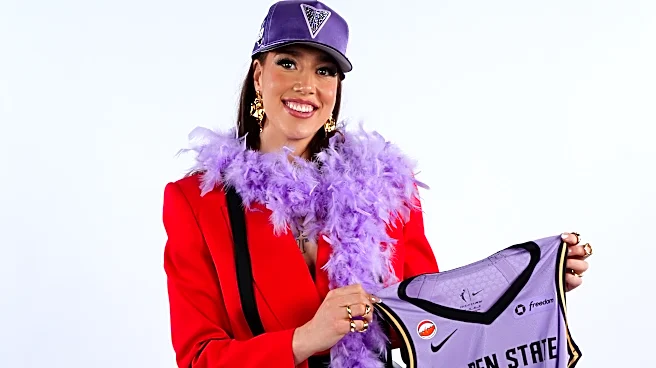
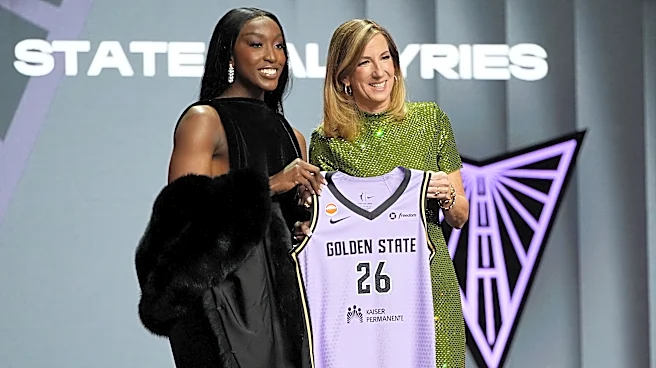
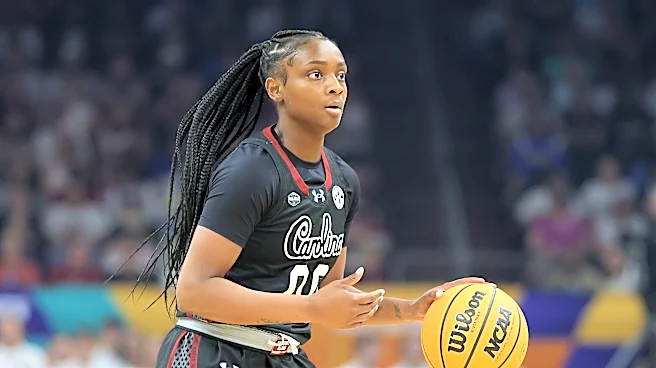
The Golden State Valkyries selected LSU star Flau'jae Johnson with the No. 8 pick in the 2026 WNBA draft, only to trade her to the Seattle Storm shortly after. The trade involved Marta Suarez, who was drafted 18th overall, and a 2028 second-round pick.
Johnson, a prominent figure in college basketball, gained fame not only for her athletic prowess but also for her rap career. Despite her potential, Johnson's performance at LSU was marked by inconsistency, with notable highs such as a double-double against Oklahoma and lows like a scoreless game against Vanderbilt. Her shooting struggles and decision-making on the court were highlighted as areas needing improvement.
Why It's Important?
The trade of Flau'jae Johnson underscores the unpredictable nature of sports drafts and the strategic maneuvers teams make to optimize their rosters. Johnson's move to the Seattle Storm could provide her with a fresh start and an opportunity to refine her skills in a new environment. For the Valkyries, acquiring Marta Suarez and a future draft pick may align with their long-term team-building strategy. This development impacts the WNBA landscape by reshuffling talent and potentially altering team dynamics. Johnson's dual career in sports and music also highlights the growing trend of athletes leveraging their fame across multiple platforms.
What's Next?
Flau'jae Johnson will now join the Seattle Storm, where she will aim to address the inconsistencies that marked her college career. The Storm will likely focus on integrating her into their system and helping her develop her game further. For the Valkyries, the acquisition of Marta Suarez and a future draft pick provides them with assets to build upon. Fans and analysts will be watching closely to see how Johnson adapts to her new team and whether she can fulfill her potential as a professional athlete.
Beyond the Headlines
Johnson's trade and her burgeoning rap career reflect broader cultural shifts where athletes increasingly engage in cross-industry ventures. This trend raises questions about the balance between sports commitments and external pursuits, and how it affects performance and marketability. Additionally, the trade highlights the strategic considerations teams must weigh in balancing immediate needs with future prospects, a dynamic that is crucial in professional sports management.