


What's Happening?
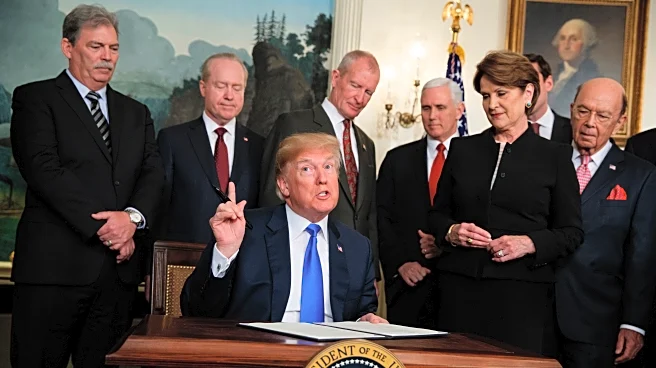
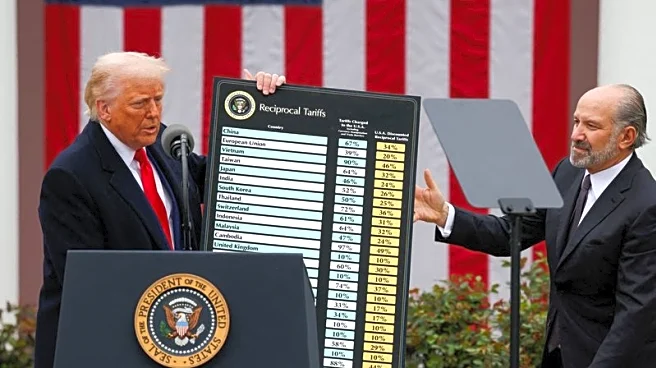
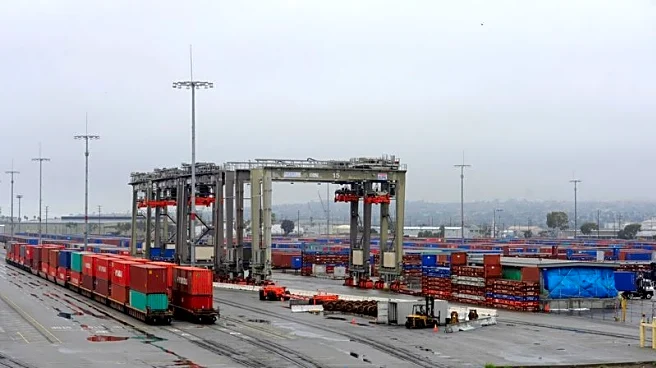
The U.S. trade deficit decreased slightly in 2025 to $901 billion from $904 billion in 2024, according to the Commerce Department. Despite this reduction, the goods trade gap reached a record high, driven by increased imports of machinery and aircraft, which are central to President Trump's protectionist policies. The tariffs imposed by President Trump, intended to protect U.S. industries and bring manufacturing back to America, have led to a significant shift in trade dynamics. The deficit with China decreased by nearly 32% to $202 billion, while trade gaps with Taiwan and Vietnam increased significantly. The U.S. also saw a larger surplus in services trade, which rose to $339 billion.
Why It's Important?
The trade deficit's slight reduction amidst a record goods
gap highlights the complex impact of President Trump's tariffs. While the tariffs aim to protect domestic industries, they have led to increased costs for U.S. importers, potentially affecting consumer prices and business profitability. The shift in trade patterns, with reduced deficits with China but increased gaps with other countries, suggests a reorientation of supply chains. This could have long-term implications for U.S. trade relationships and economic strategy, particularly as the country negotiates trade agreements with key partners like Mexico and Canada.
What's Next?
The ongoing trade negotiations and potential adjustments to tariff policies will be crucial in shaping future trade dynamics. Businesses may need to adapt to changing import costs and explore alternative supply chains. The U.S. government may also face pressure to address the economic impacts of tariffs, particularly if they continue to affect consumer prices and business operations. Monitoring the trade balance and its components will be essential for policymakers and economic stakeholders.