




What's Happening?
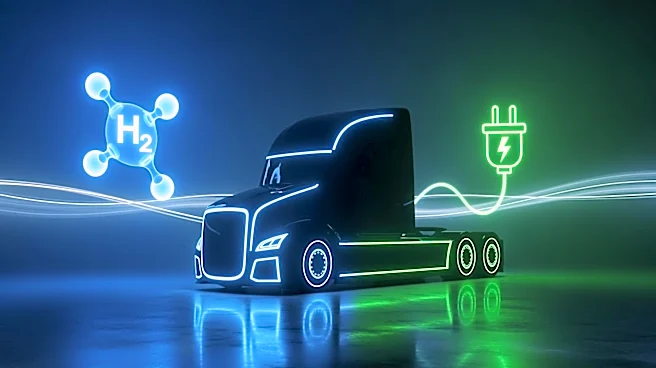
The ACT Expo 2026 highlighted significant advancements in hydrogen and electric vehicle technologies, focusing on zero-emission solutions for the trucking industry. Toyota and Hyroad Energy announced a partnership to deploy 40 hydrogen fuel cell Class
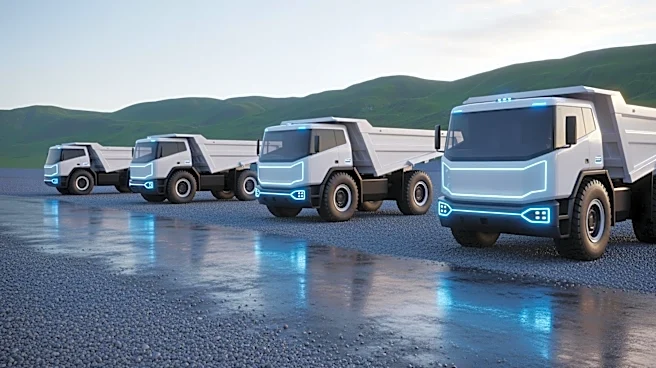
8 trucks in Southern California, aiming to advance zero-emission freight operations. The trucks offer a range of up to 500 miles and quick refueling times, producing only water vapor emissions. Additionally, Hino Trucks introduced the Le Series, a new battery-electric medium-duty vehicle designed for improved efficiency and sustainability. New Eagle launched the OpenECU NX3, a platform to simplify electric vehicle architectures by integrating charging and control functions.
Why It's Important?
The developments showcased at ACT Expo 2026 represent a significant step towards reducing the environmental impact of the transportation sector. The deployment of hydrogen and electric trucks supports efforts to decarbonize freight operations, aligning with broader sustainability goals. These innovations could lead to reduced greenhouse gas emissions and improved air quality, benefiting public health and the environment. The advancements also highlight the growing collaboration between automotive manufacturers and technology companies to accelerate the transition to cleaner energy sources.
What's Next?
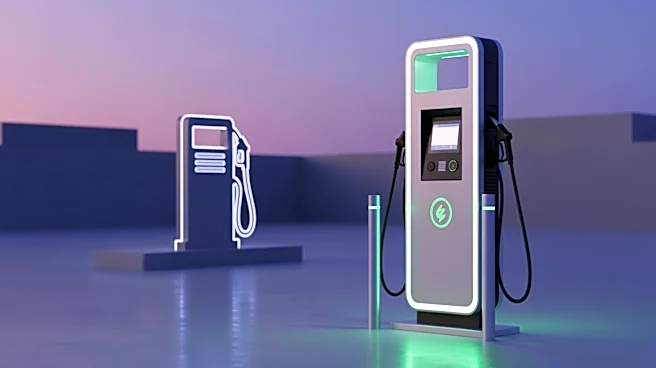
The introduction of new hydrogen and electric vehicle technologies is expected to drive further investment and innovation in the transportation sector. As production of these vehicles begins, there will likely be increased demand for supporting infrastructure, such as hydrogen fueling stations and electric charging networks. Policymakers and industry leaders may focus on creating incentives and regulatory frameworks to encourage the adoption of zero-emission vehicles. Continued collaboration between manufacturers, technology providers, and government agencies will be crucial in overcoming challenges and achieving widespread deployment.