


What's Happening?
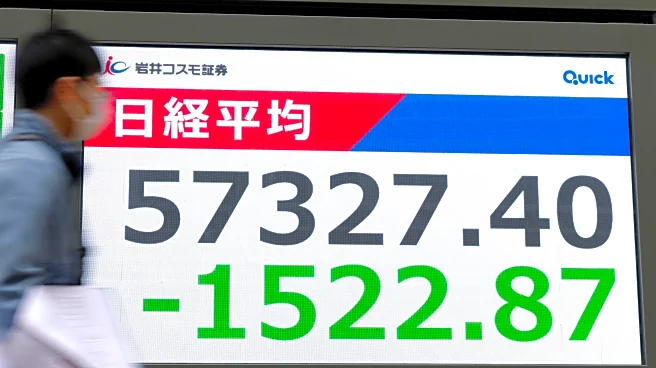
Investors are evaluating the potential impact of the escalating conflict between the U.S. and Iran on market volatility. Historically, Wall Street has followed the adage 'buy the cannons, sell the trumpets,' suggesting that war-related market dips can be buying
opportunities. However, the current situation is complicated by the potential for significant oil and natural gas price increases, which could dampen economic growth. Crude oil prices have surged following U.S. military actions in Iran and Iran's threat to block the Strait of Hormuz, a critical passage for global oil shipments. Despite these tensions, current oil prices remain below crisis levels seen in past conflicts. Analysts suggest that a sustained oil price increase could lead to a recession or economic slowdown, especially if central banks respond with tighter monetary policies.
Why It's Important?
The conflict's impact on oil prices is a critical factor for the U.S. economy, as significant increases could lead to inflationary pressures and economic slowdown. This situation poses a risk to the stock market, particularly if oil prices rise sharply and persistently. Investors are closely monitoring whether these conditions will materialize, as they could lead to a significant downturn in the S&P 500. The broader economic implications include potential disruptions in global oil supply chains and increased geopolitical tensions, which could affect international trade and economic stability.
What's Next?
Market participants are watching for further developments in the U.S.-Iran conflict and any resulting changes in oil prices. Analysts are also considering potential policy responses from central banks, which could influence market dynamics. Investors may look for tactical opportunities amid the volatility, but the situation remains fluid, with geopolitical events continuing to drive market sentiment.