


What's Happening?
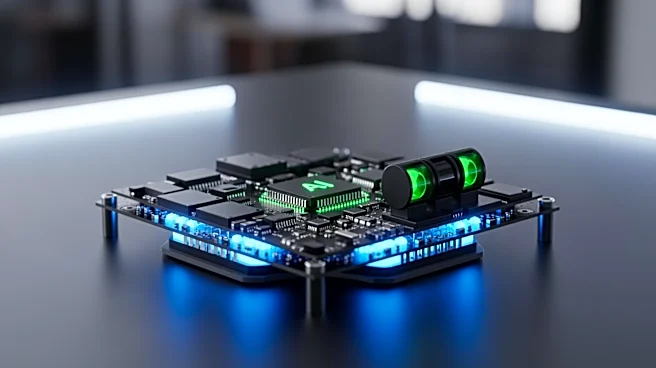
Makerfire, a global provider of industrial-grade drone hardware, has adopted the UTMSYS USX51 AI Computing Flight Controller. This controller is designed for industrial scenarios and features stable flight control algorithms, high-computing edge AI, and a safety-adaptive
design. It aims to upgrade industrial drones from stable flight to autonomous decision-making, offering a cost-effective solution for enterprises in fields such as surveying, mapping, security, and industrial inspection. The USX51 integrates the Pixhawk 6X flight control system with an AI module, supporting visual recognition and multi-target tracking, and is compatible with AI models like YOLO and MobileNet. It operates effectively in harsh environments, reducing development costs and cycles for enterprises.
Why It's Important?
The adoption of the USX51 AI Flight Controller by Makerfire represents a significant advancement in the commercial use of drones. By enabling autonomous decision-making, enterprises can improve operational efficiency and expand the scope of low-altitude operations. This technology is particularly beneficial for industries requiring precise positioning and stable operation in challenging environments, such as security monitoring and power line inspection. The integration of AI capabilities into drone technology could lead to reduced costs and increased productivity, potentially transforming industrial practices and contributing to the growth of the low-altitude economy.
What's Next?
Makerfire's adoption of the USX51 controller is expected to drive further innovation in drone technology, with potential expansions into new industrial applications. Enterprises may begin to explore additional uses for drones equipped with advanced AI capabilities, potentially leading to new business models and operational strategies. As the technology becomes more widespread, regulatory bodies may need to address the implications of increased drone autonomy, including safety and privacy concerns.
Beyond the Headlines
The integration of AI into drone technology raises ethical and legal questions, particularly regarding surveillance and data privacy. As drones become more autonomous, there may be increased scrutiny on how data is collected and used. Additionally, the advancement of drone technology could impact employment in industries reliant on manual inspection and monitoring, necessitating workforce adaptation and retraining.