






What's Happening?
Artificial intelligence (AI) is transforming the agricultural sector by shifting from traditional labor-intensive methods to data-driven systems. According to a review published in Applied System Innovation, AI is being integrated into agriculture through
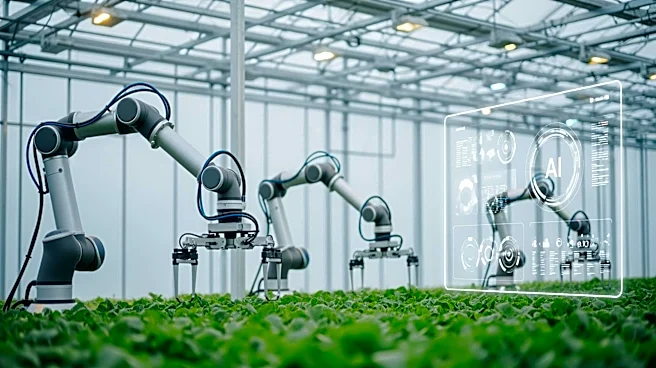
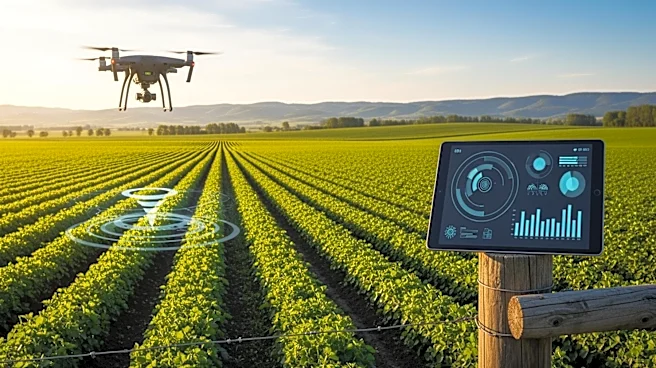
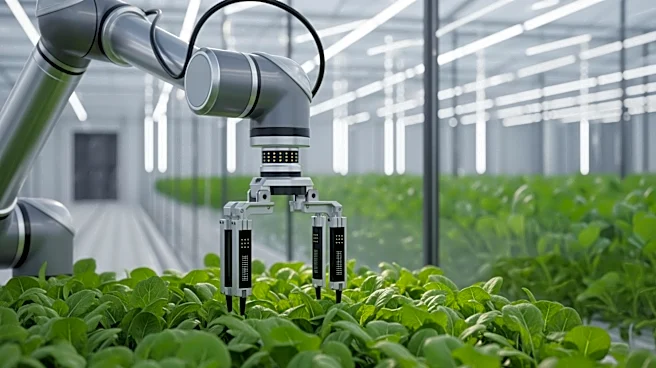
a framework of perception, decision-making, and execution. This involves using sensors and drones to collect field data, which is then processed by algorithms to make management decisions, and executed by robots or autonomous machines. The review highlights the use of AI in crop monitoring, disease detection, and stress assessment, utilizing technologies such as UAVs, satellite imagery, and various imaging sensors. AI models are also being used for yield prediction, pest and disease warnings, and precision water and nutrient management. However, challenges remain in data quality, model explainability, and the deployment of execution systems.
Why It's Important?
The integration of AI in agriculture is crucial as it addresses the growing pressures on global food systems due to population growth, climate change, and resource scarcity. By enabling more precise and efficient farming practices, AI can potentially increase crop yields, reduce environmental impact, and optimize resource use. This technological shift could significantly benefit the agricultural industry by improving productivity and sustainability. However, the review also warns of potential inequalities, as AI systems are often designed for large-scale, mechanized farming, which may not be suitable for smallholder farms in developing regions. Ensuring fair data practices and adapting technologies to local contexts are essential for inclusive agricultural development.
What's Next?
Future developments in AI for agriculture will likely focus on overcoming current challenges such as data integration, model explainability, and the cost of advanced technologies. Efforts to create locally adapted datasets and low-cost tools will be important for making AI accessible to small and medium-sized farms. Additionally, addressing issues of data sovereignty and digital colonialism will be crucial to ensure that farmers in developing regions benefit fairly from AI advancements. Continued research and collaboration between technology developers and agricultural stakeholders will be key to realizing the full potential of AI in agriculture.
Beyond the Headlines
The ethical implications of AI in agriculture include concerns over data ownership and the potential for digital colonialism, where farmers become mere data suppliers for external companies. This raises questions about who controls and benefits from agricultural data. Furthermore, the reliance on AI could lead to a loss of traditional farming knowledge and practices. Balancing technological advancement with cultural and ethical considerations will be important to ensure that AI contributes positively to the agricultural sector.