
What's Happening?
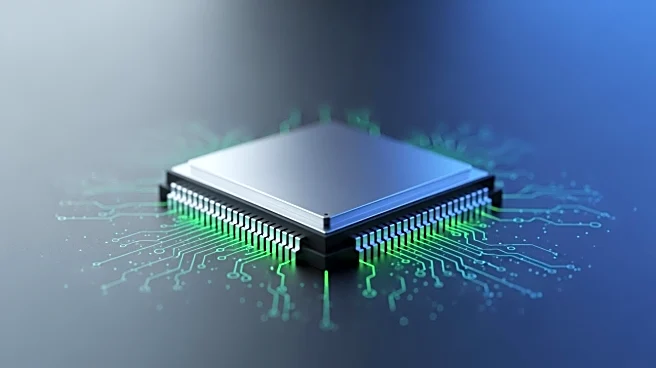
Qualcomm's Snapdragon X Arm CPUs, released in 2024, were expected to revolutionize PC gaming by offering superior single-core performance compared to x86 CPUs. However, the anticipated shift has not materialized due to several challenges. The Snapdragon X chips, primarily designed as low-power mobile SoCs, struggle with gaming performance because most PC games are not natively compiled for Arm architecture. This necessitates emulation of x86 code, which adds a performance overhead. Qualcomm's reliance on Microsoft's Prism emulation layer for Windows on Arm further complicates matters. Despite updates to the emulation layer, gaming experiences remain inconsistent. Qualcomm's second-generation Snapdragon X2 CPUs continue to face similar issues,
as they still rely on integrated graphics and emulation.
Why It's Important?
The struggle of Arm chips to penetrate the PC gaming market highlights the complexities of transitioning from x86 to Arm architecture. This has significant implications for the tech industry, as it underscores the challenges of software compatibility and performance optimization. Qualcomm's experience serves as a cautionary tale for other companies considering similar transitions. The outcome of this battle between Arm and x86 could influence future developments in PC hardware, potentially affecting manufacturers, developers, and consumers. A successful transition could lead to more energy-efficient and cost-effective computing solutions, while failure could reinforce the dominance of x86 architecture.
What's Next?
For Arm chips to gain a foothold in the PC gaming market, several developments are necessary. Games need to be compiled natively for Arm architecture, and there must be support for discrete graphics cards on Arm platforms. Qualcomm and other companies, like Nvidia, are working on improving their offerings, but significant advancements are required. Nvidia's entry into the Arm PC market with its upcoming chip could introduce powerful graphics capabilities, but it will also face compatibility challenges. The timeline for a successful Arm transition in PC gaming is uncertain, with experts predicting that significant progress may not occur until 2027 or 2028.