



What's Happening?
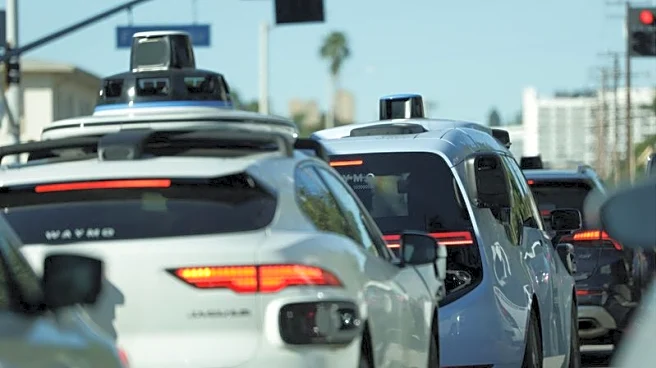
New York Governor Kathy Hochul has withdrawn a proposal that aimed to amend vehicle and traffic laws to legalize the operation of robotaxis in the state, excluding New York City. The decision was confirmed by Hochul's spokesperson, Sean Butler, who cited a lack of legislative support as the reason for the withdrawal. This development is a setback for Waymo and other autonomous vehicle companies that have been attempting to test and deploy robotaxis in New York. Waymo expressed disappointment but remains committed to working with the state legislature to advance the issue. The proposal, part of Hochul's broader budget plan, included restrictions such as prohibiting robotaxi services in cities with populations over one million and requiring approval
from the state's transportation commissioner. Despite the withdrawal, Waymo continues to test its vehicles in New York City under a permit that allows testing with a human safety operator.
Why It's Important?
The withdrawal of the proposal represents a significant hurdle for the expansion of autonomous vehicle services in New York, a key market for companies like Waymo. The decision underscores the challenges faced by the autonomous vehicle industry in gaining regulatory approval and public acceptance. For Waymo, the inability to operate robotaxis in New York limits its growth potential and delays the introduction of its services to a major urban market. The move also highlights the complexities of balancing innovation with public safety and regulatory compliance. Stakeholders, including local governments and the public, remain cautious about the widespread deployment of autonomous vehicles, emphasizing the need for transparency and safety assurances.
What's Next?
With the proposal withdrawn, the existing autonomous vehicle pilot program in New York, which is more restrictive, will continue. This program allows companies to seek exemptions for testing but not for commercial deployment. Waymo plans to continue its testing in New York City, where it is permitted to operate a limited number of vehicles with human safety operators. The company is likely to engage with state legislators and other stakeholders to address concerns and potentially revisit the proposal in the future. The outcome of these discussions could influence the regulatory landscape for autonomous vehicles in New York and potentially set precedents for other states.